Photograph credits
Every photograph in Bayt Syria is a freely-licensed frame, credited to the photographer who made it. Pictures run without captions; the record lives here.
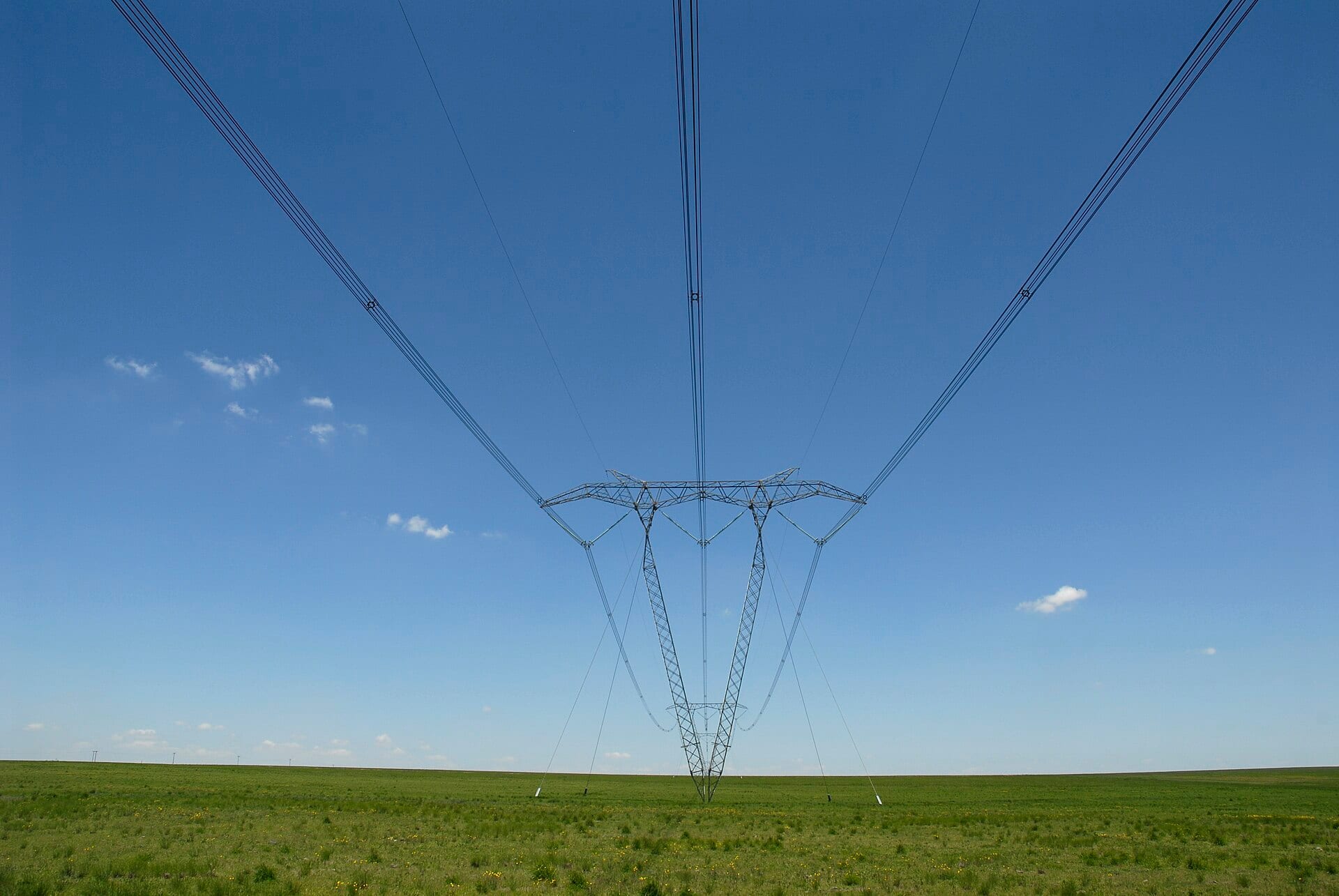
A guyed steel suspension tower standing alone in open grassland, its conductors running away to both horizons.
A guyed suspension tower on open grassland in Gauteng, South Africa. Suspension towers are the type used at the 230 straight positions on the Rural Damascus–Daraa route.
- Photograph:
- Graeme Williams, Media Club / Wikimedia Commons
- Licence:
- CC BY-SA 2.0
- Source:
- Wikimedia Commons
- Used in:
- The Route Was Built 321 Times
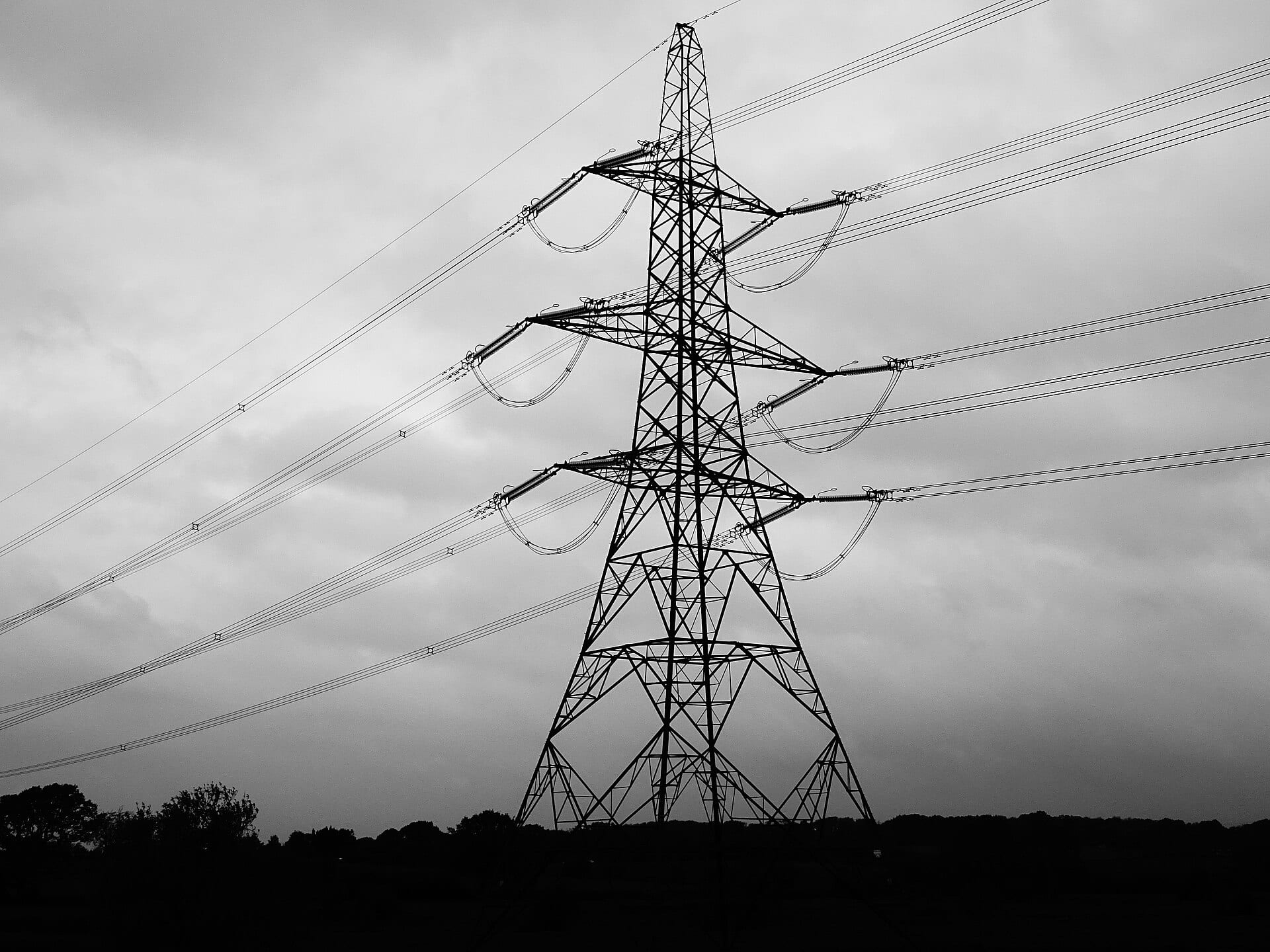
A lattice tower in silhouette against a grey sky, its conductors anchored in tension strings that loop back on themselves.
A dead-end tower photographed in southern England. The looping jumpers show the anchoring duty that heavy-tension towers perform — 17 of them on the Syrian route.
- Photograph:
- EVERYMAN FILMS / Wikimedia Commons
- Licence:
- CC BY 2.0
- Source:
- Wikimedia Commons
- Used in:
- The Route Was Built 321 Times
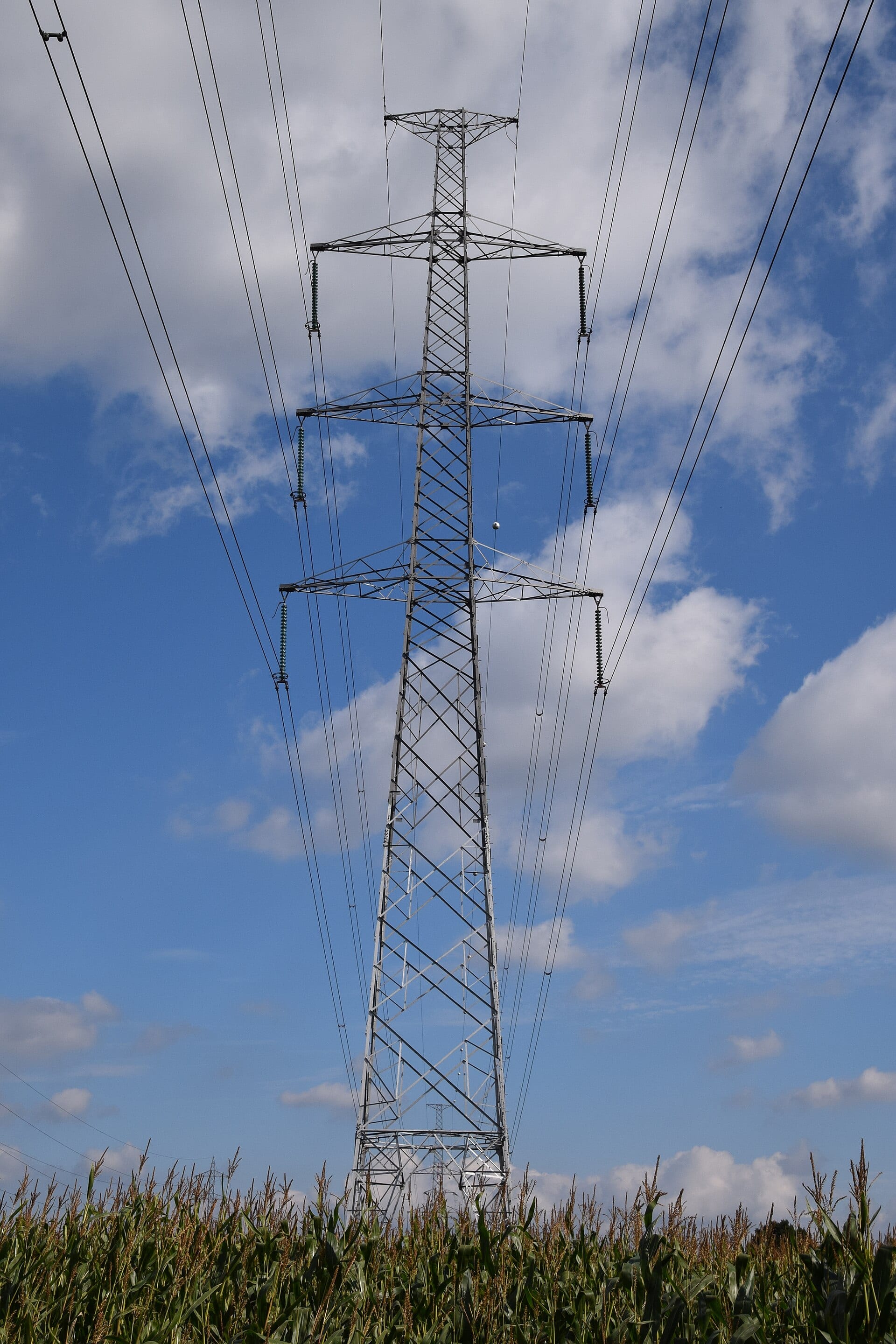
A tall lattice transmission tower carrying two circuits, photographed from below against a pale sky.
A 380 kV double-circuit tower at Sint-Niklaas, Belgium — the nearest freely-licensed equivalent to the double-circuit arrangement used between Rural Damascus and Daraa.
- Photograph:
- Luc.T / Wikimedia Commons
- Licence:
- CC BY 2.0
- Source:
- Wikimedia Commons
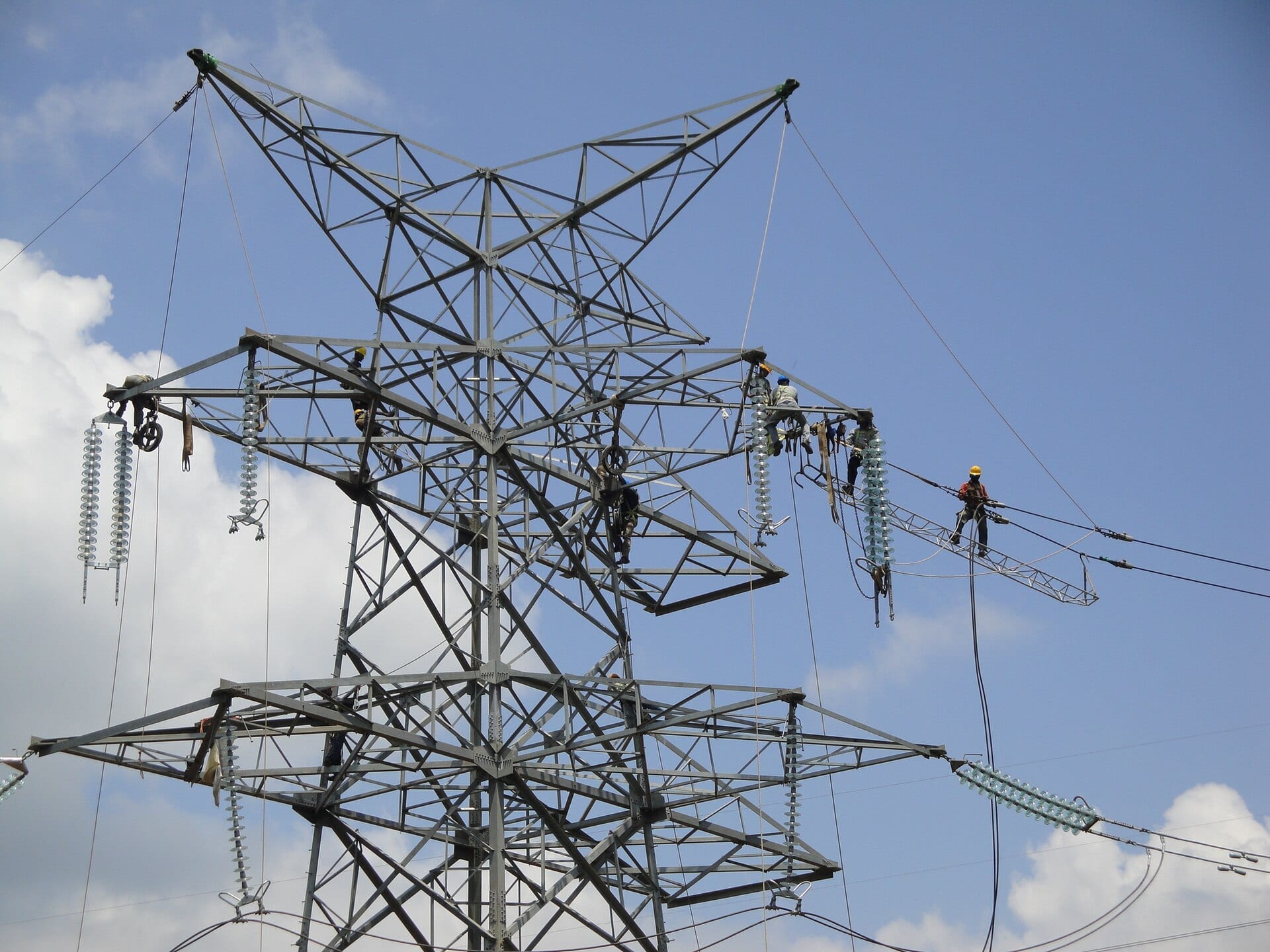
Linesmen in helmets and harnesses working along the crossarms of a transmission tower, insulator strings hanging beside them.
Conductor stringing in progress in Sri Lanka. It is the stage at which separately built tower positions first become one continuous line.
- Photograph:
- Chathuranga Perera (Bcpadd) / Wikimedia Commons
- Licence:
- CC BY 3.0
- Source:
- Wikimedia Commons
- Used in:
- The Route Was Built 321 Times
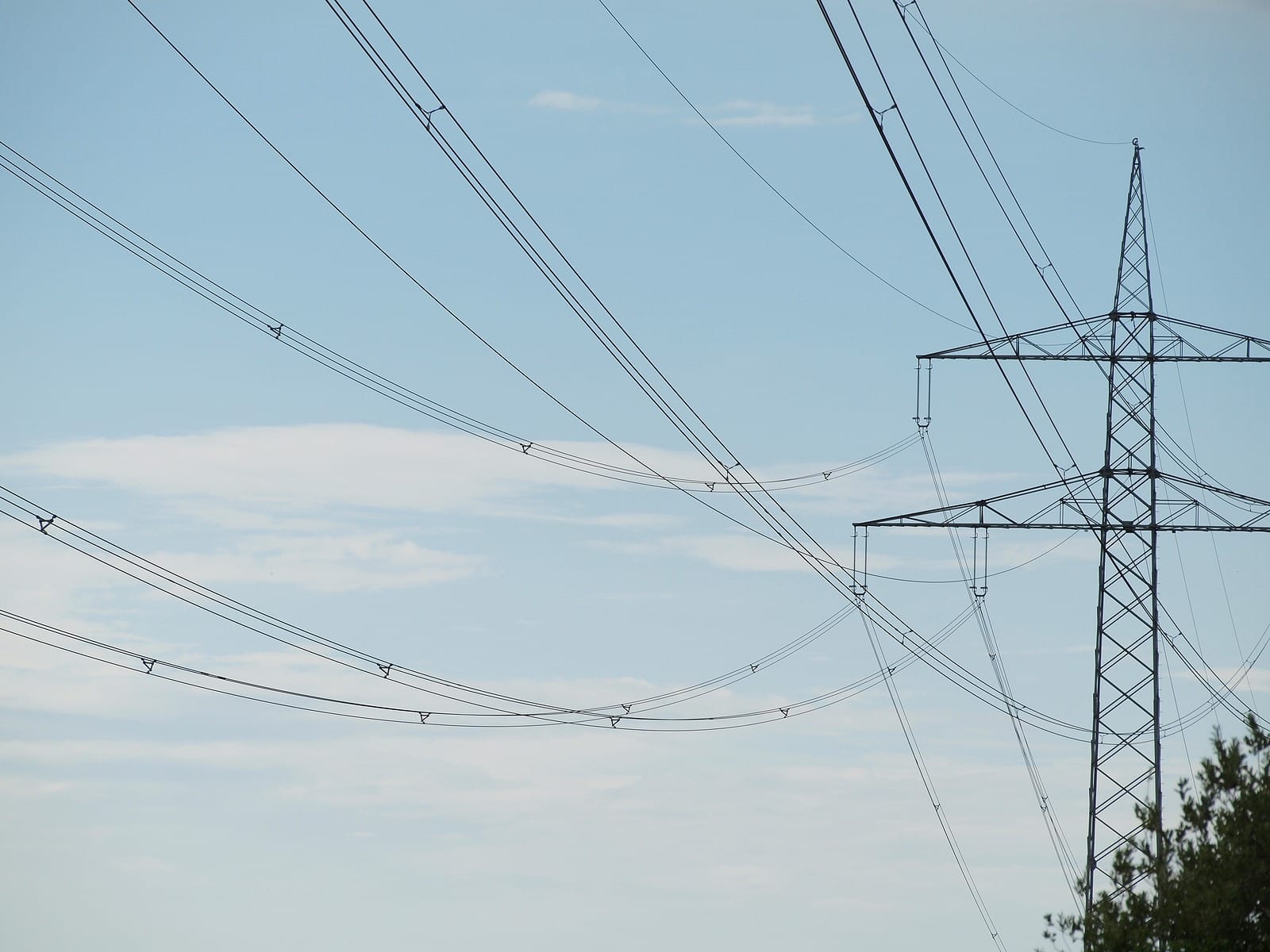
A close view of bundled conductors held apart by metal spacers along the span.
Bundle spacers on an overhead line in Germany. Roughly 8,200 of them were installed on the Syrian route.
- Photograph:
- Kreuzschnabel / Wikimedia Commons
- Licence:
- CC BY-SA 3.0
- Source:
- Wikimedia Commons
- Used in:
- The Route Was Built 321 Times
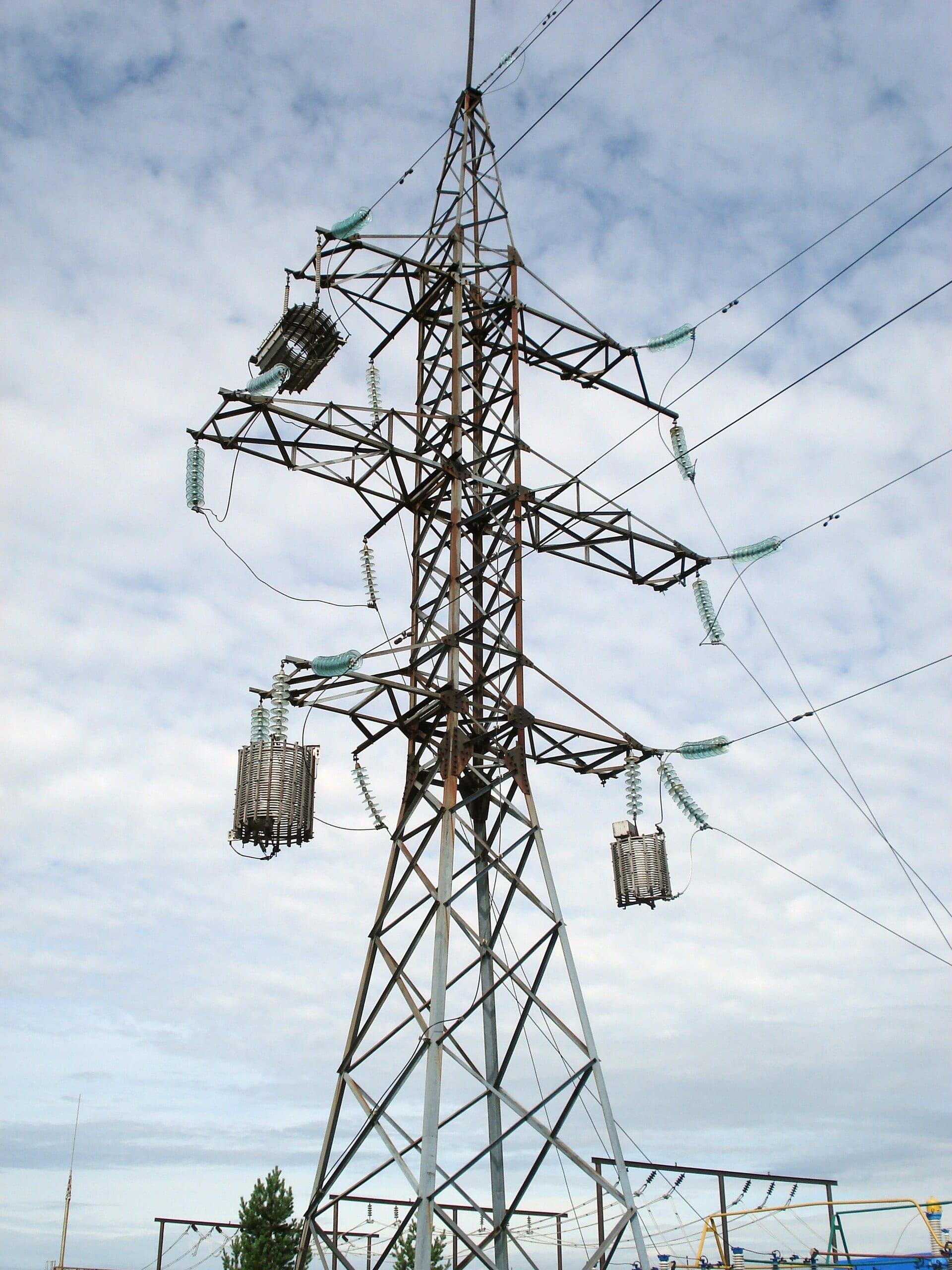
The upper section of a transmission tower, with a fibre-optic ground wire running above the phase conductors.
A tower carrying line traps and an optical fibre cable. The Syrian route runs about 107 km of Optical Ground Wire in the same top position.
- Photograph:
- Den Siaopin / Wikimedia Commons
- Licence:
- CC BY-SA 3.0
- Source:
- Wikimedia Commons
- Used in:
- The Route Was Built 321 Times
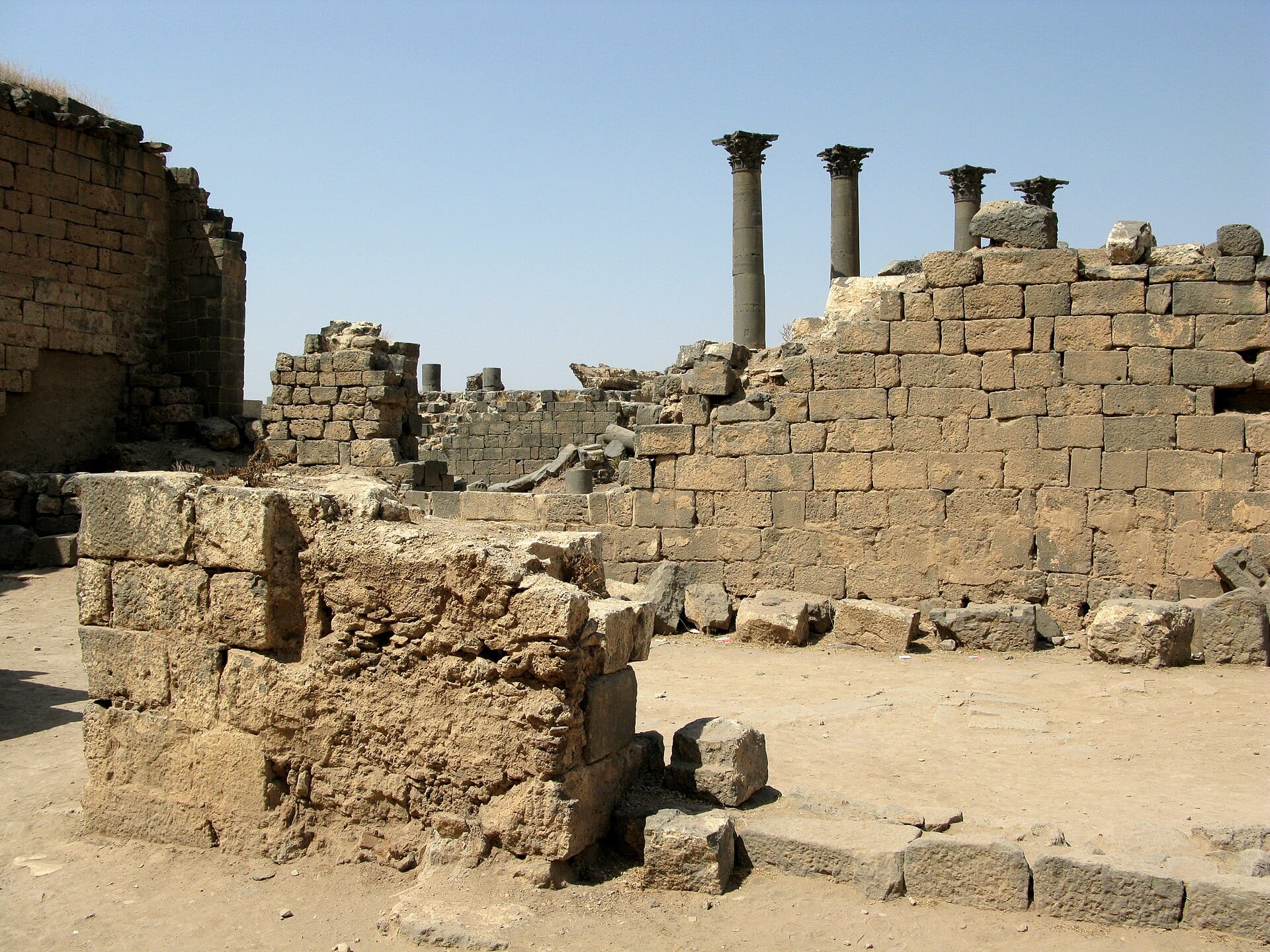
Black basalt ruins and standing columns in the ancient city of Bosra, in Daraa governorate.
- Photograph:
- Vyacheslav Argenberg / Wikimedia Commons
- Licence:
- CC BY 4.0
- Source:
- Wikimedia Commons
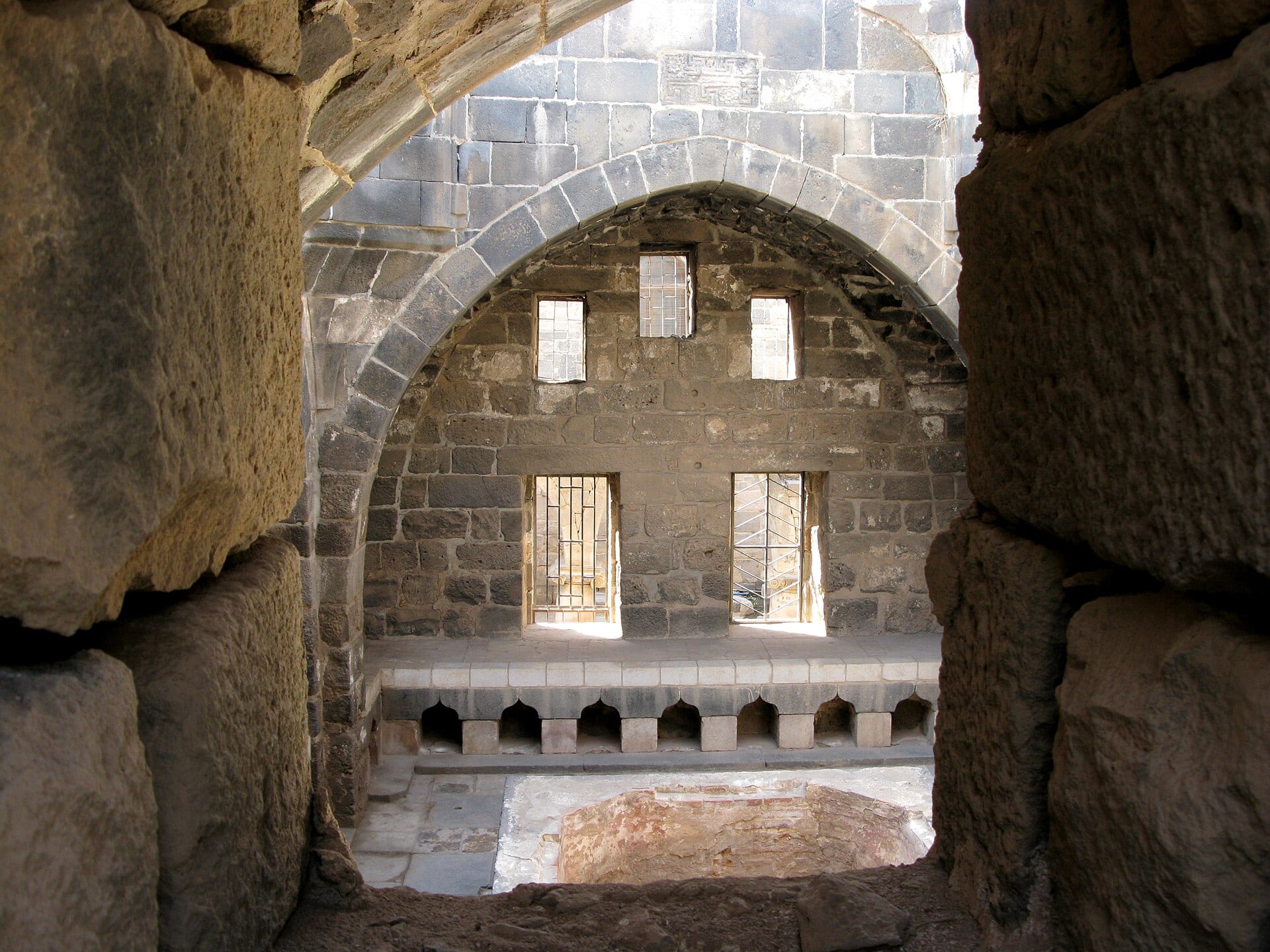
The basalt citadel at Bosra, its dark stone walls rising in tiers.
- Photograph:
- Vyacheslav Argenberg / Wikimedia Commons
- Licence:
- CC BY 4.0
- Source:
- Wikimedia Commons
- Used in:
- Held in the picture library
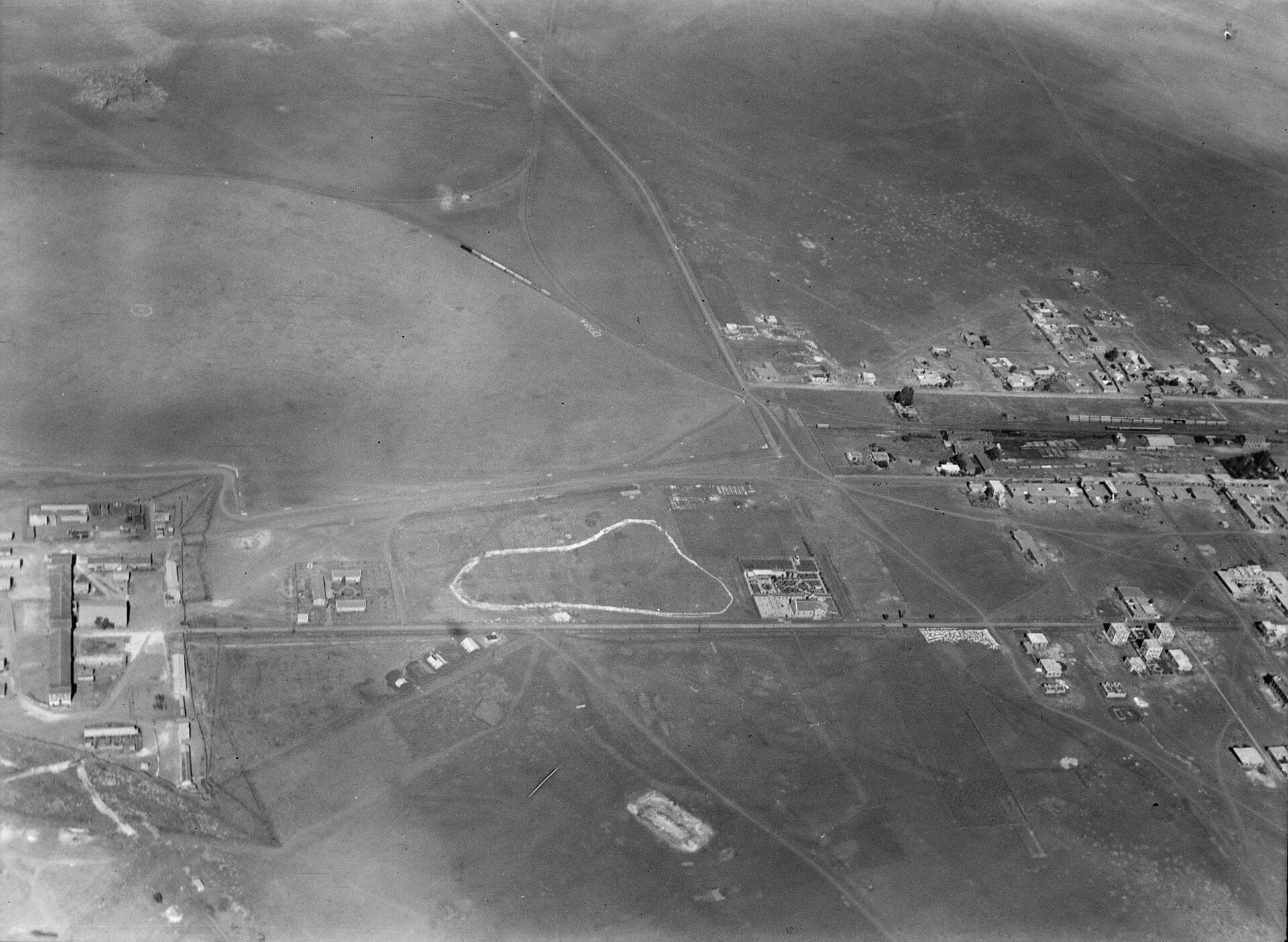
An early twentieth-century photograph of the Hejaz Railway junction at Daraa, with track running out across open country.
The Hejaz Railway junction at Daraa, photographed by the Matson Collection between the 1920s and 1940s.
- Photograph:
- Matson Collection / Wikimedia Commons
- Licence:
- Public domain
- Source:
- Wikimedia Commons
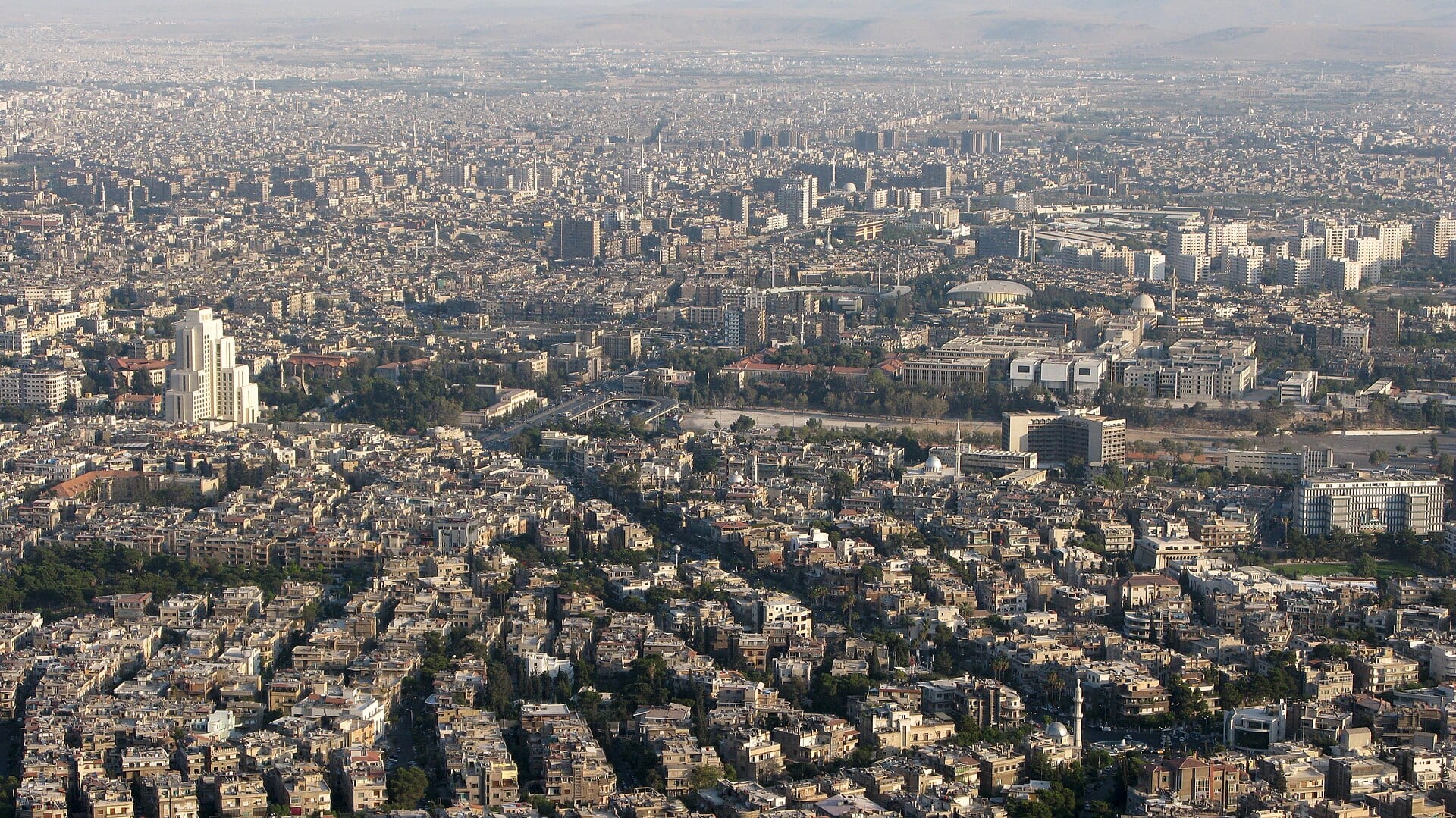
Damascus seen wide from above, the city spreading to the foot of the mountain.
- Photograph:
- Vyacheslav Argenberg / Wikimedia Commons
- Licence:
- CC BY 4.0
- Source:
- Wikimedia Commons
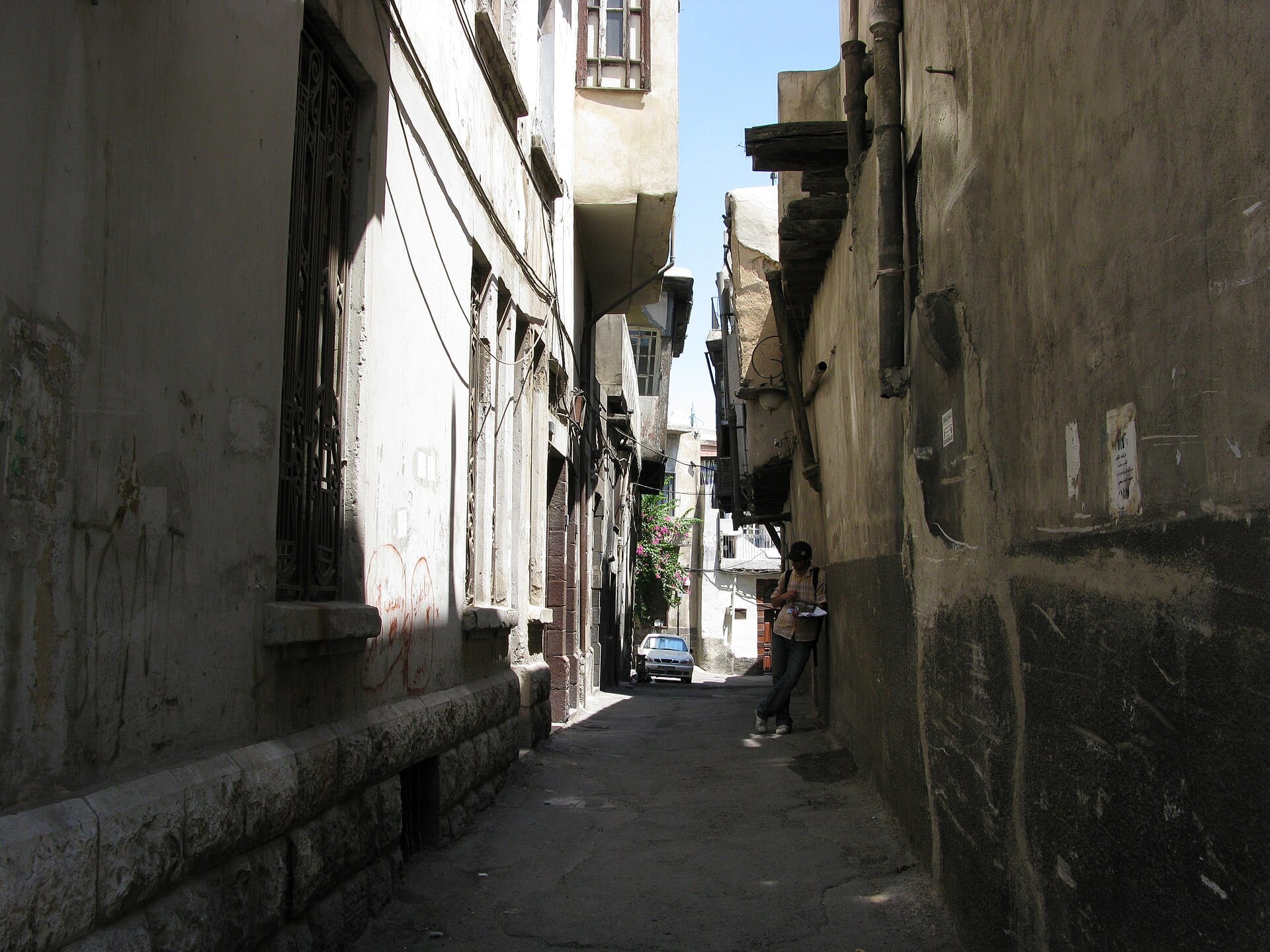
Rooftops and minarets of the old city of Damascus.
- Photograph:
- Vyacheslav Argenberg / Wikimedia Commons
- Licence:
- CC BY 4.0
- Source:
- Wikimedia Commons
- Used in:
- August Is a Different City
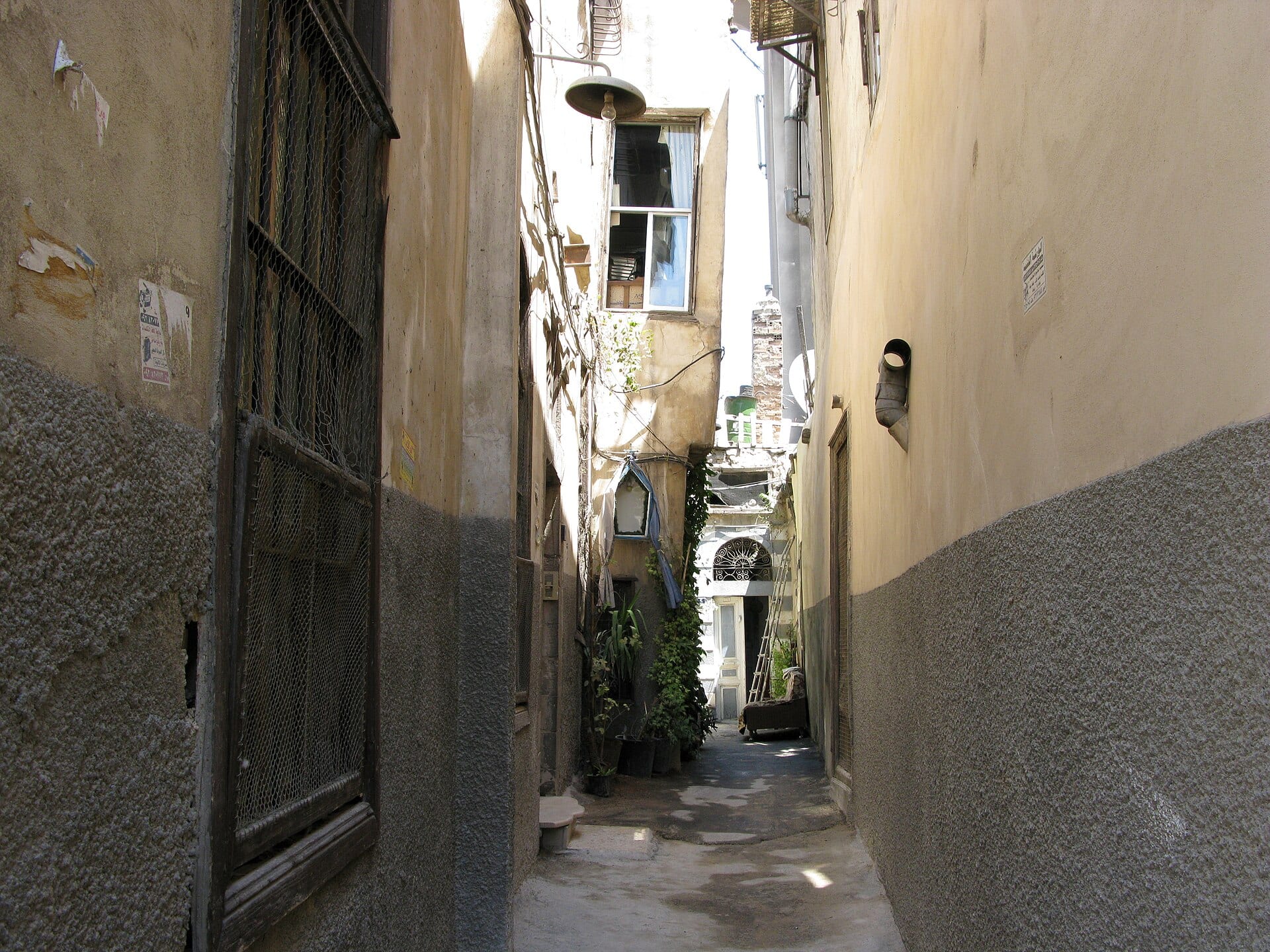
A narrow stone alleyway in old Damascus, upper storeys leaning towards each other overhead.
- Photograph:
- Vyacheslav Argenberg / Wikimedia Commons
- Licence:
- CC BY 4.0
- Source:
- Wikimedia Commons
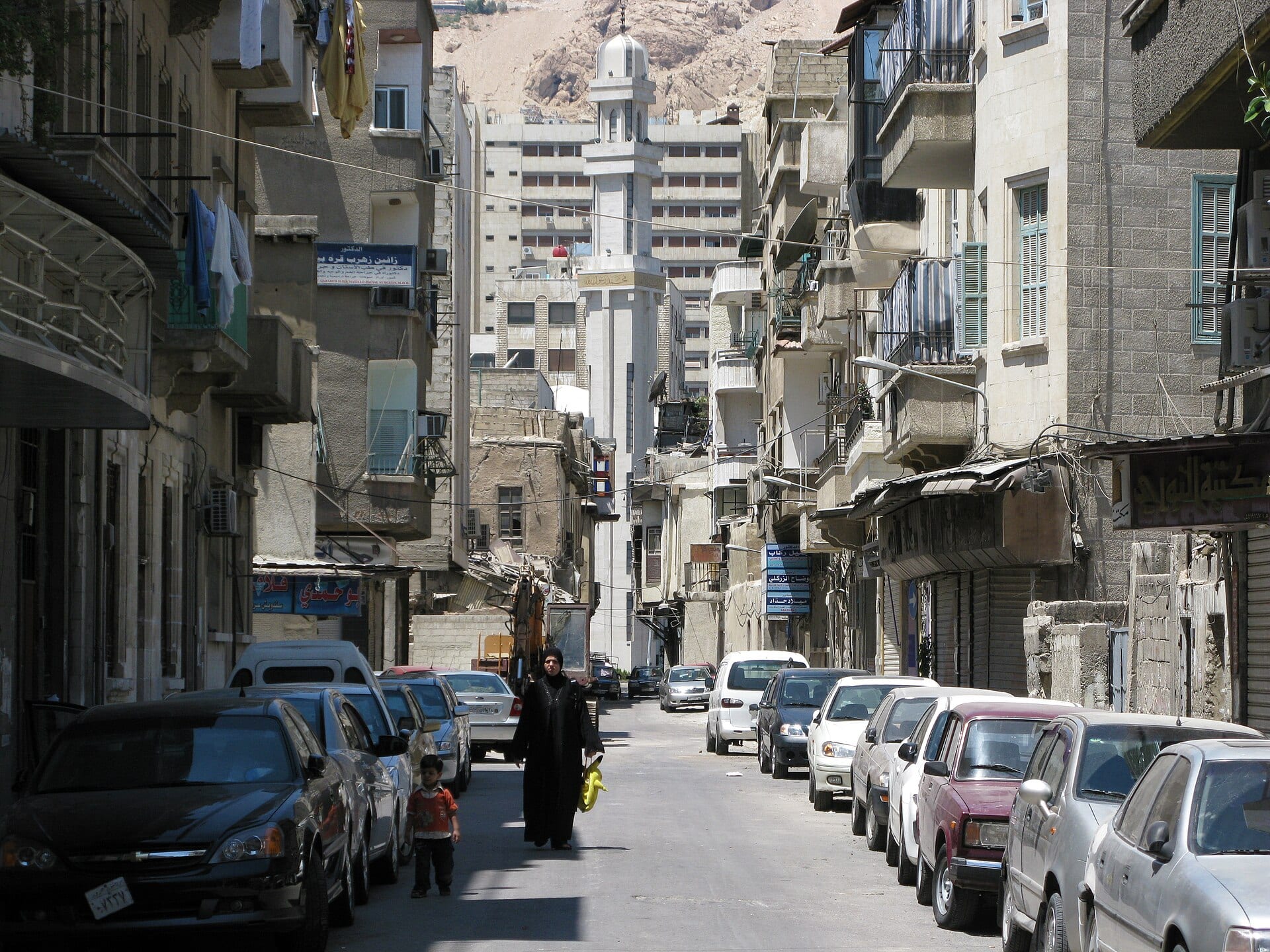
People going about an ordinary afternoon on a Damascus street.
- Photograph:
- Vyacheslav Argenberg / Wikimedia Commons
- Licence:
- CC BY 4.0
- Source:
- Wikimedia Commons
- Used in:
- The Hour Before the Shops Open
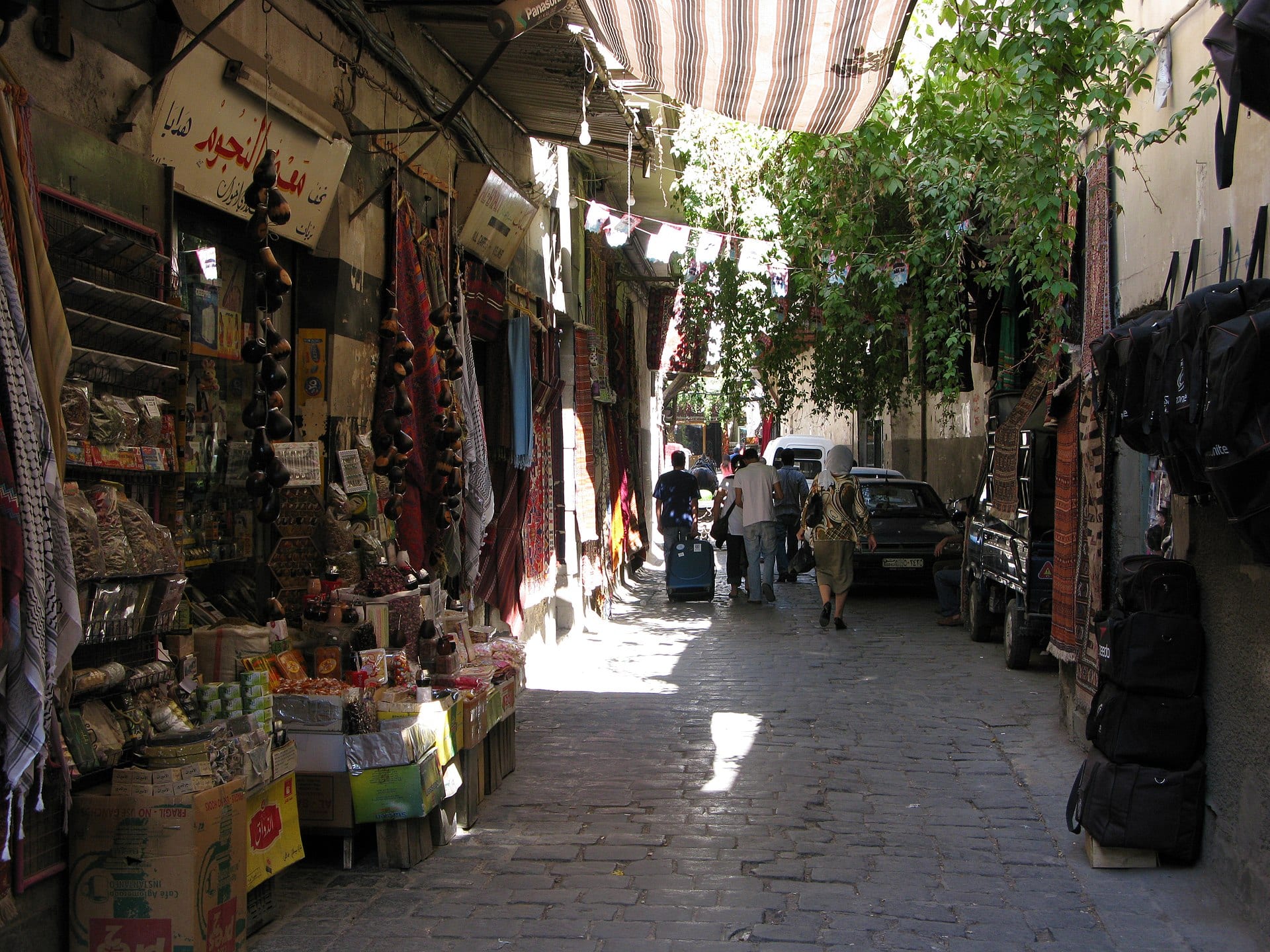
A covered souq in Damascus, goods stacked along both sides of the passage.
- Photograph:
- Vyacheslav Argenberg / Wikimedia Commons
- Licence:
- CC BY 4.0
- Source:
- Wikimedia Commons
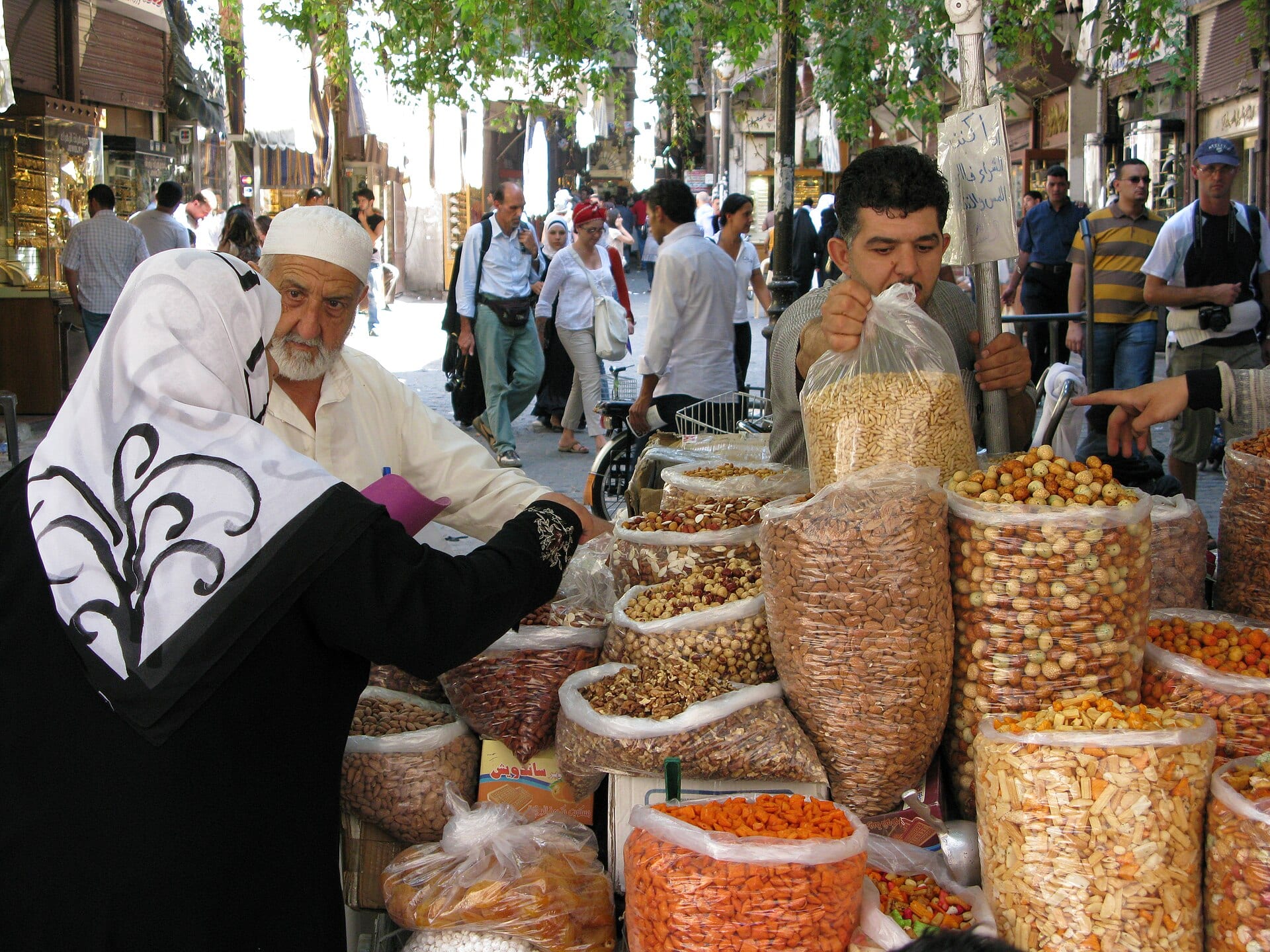
A street market in Damascus, produce laid out on tables under awnings.
- Photograph:
- Vyacheslav Argenberg / Wikimedia Commons
- Licence:
- CC BY 4.0
- Source:
- Wikimedia Commons
- Used in:
- The Hour Before the Shops Open
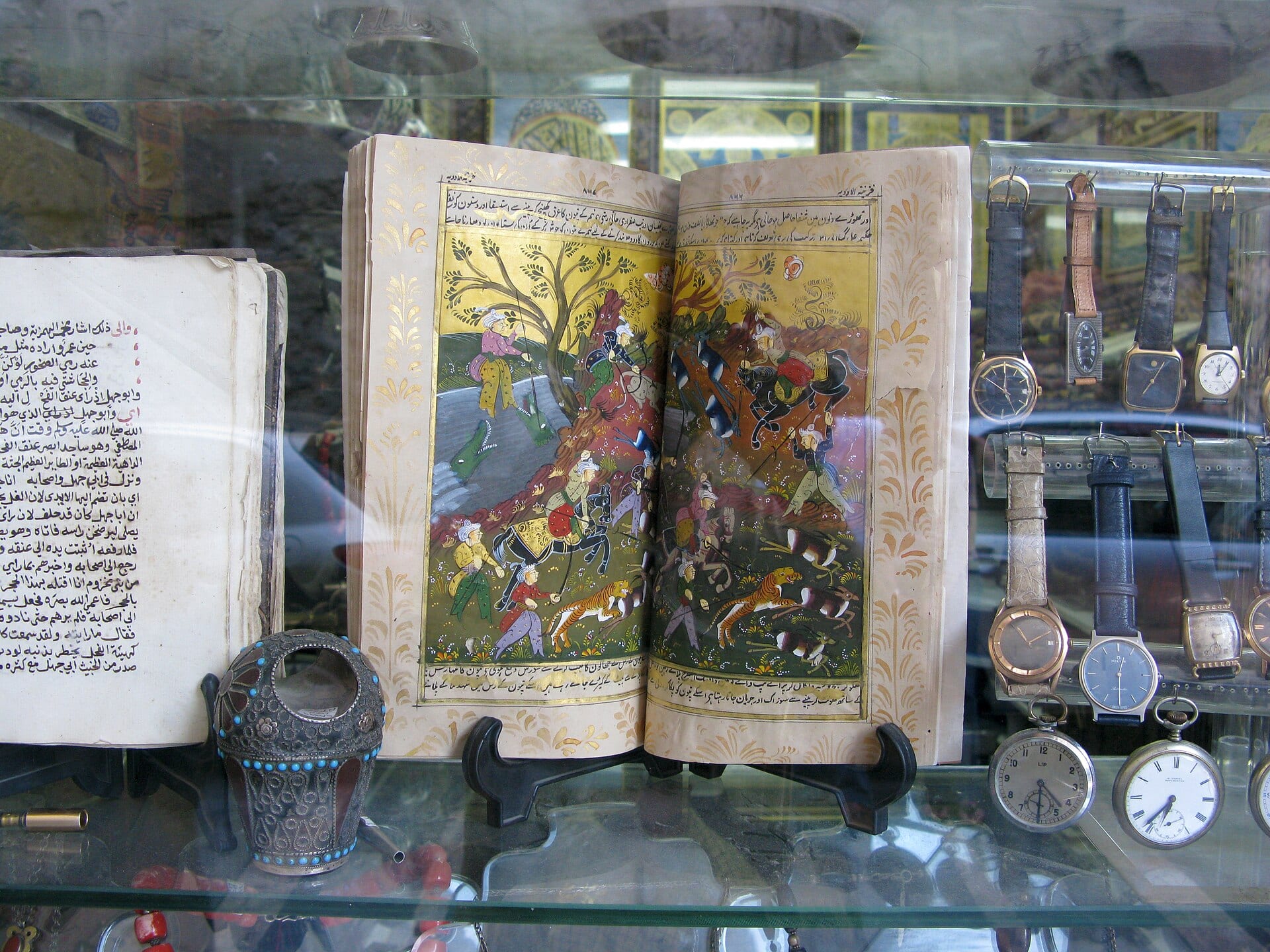
Artwork on display in Damascus, canvases propped against a wall.
- Photograph:
- Vyacheslav Argenberg / Wikimedia Commons
- Licence:
- CC BY 4.0
- Source:
- Wikimedia Commons
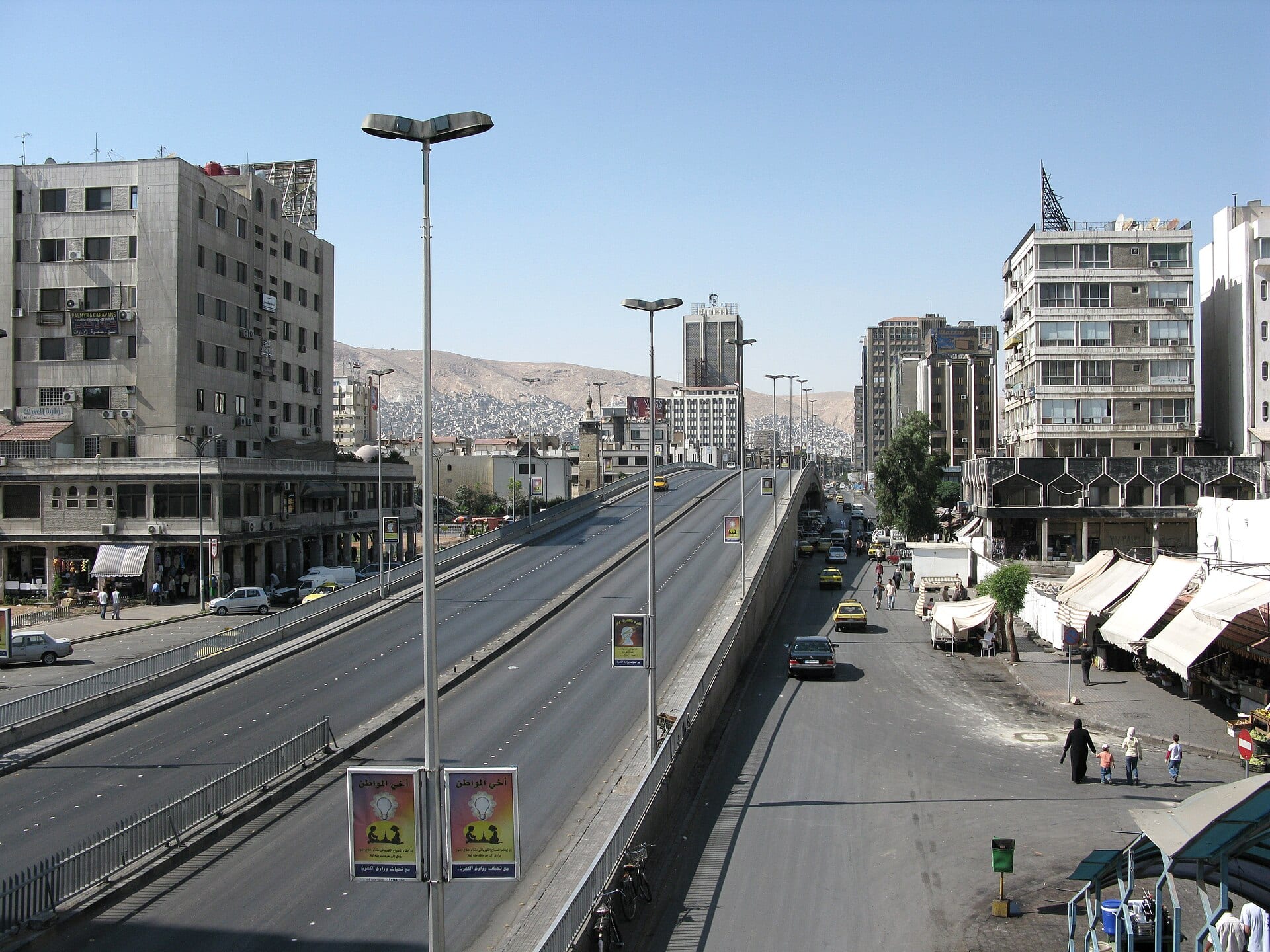
A highway running out of Damascus towards open country.
- Photograph:
- Vyacheslav Argenberg / Wikimedia Commons
- Licence:
- CC BY 4.0
- Source:
- Wikimedia Commons
- Used in:
- The Route Was Built 321 Times
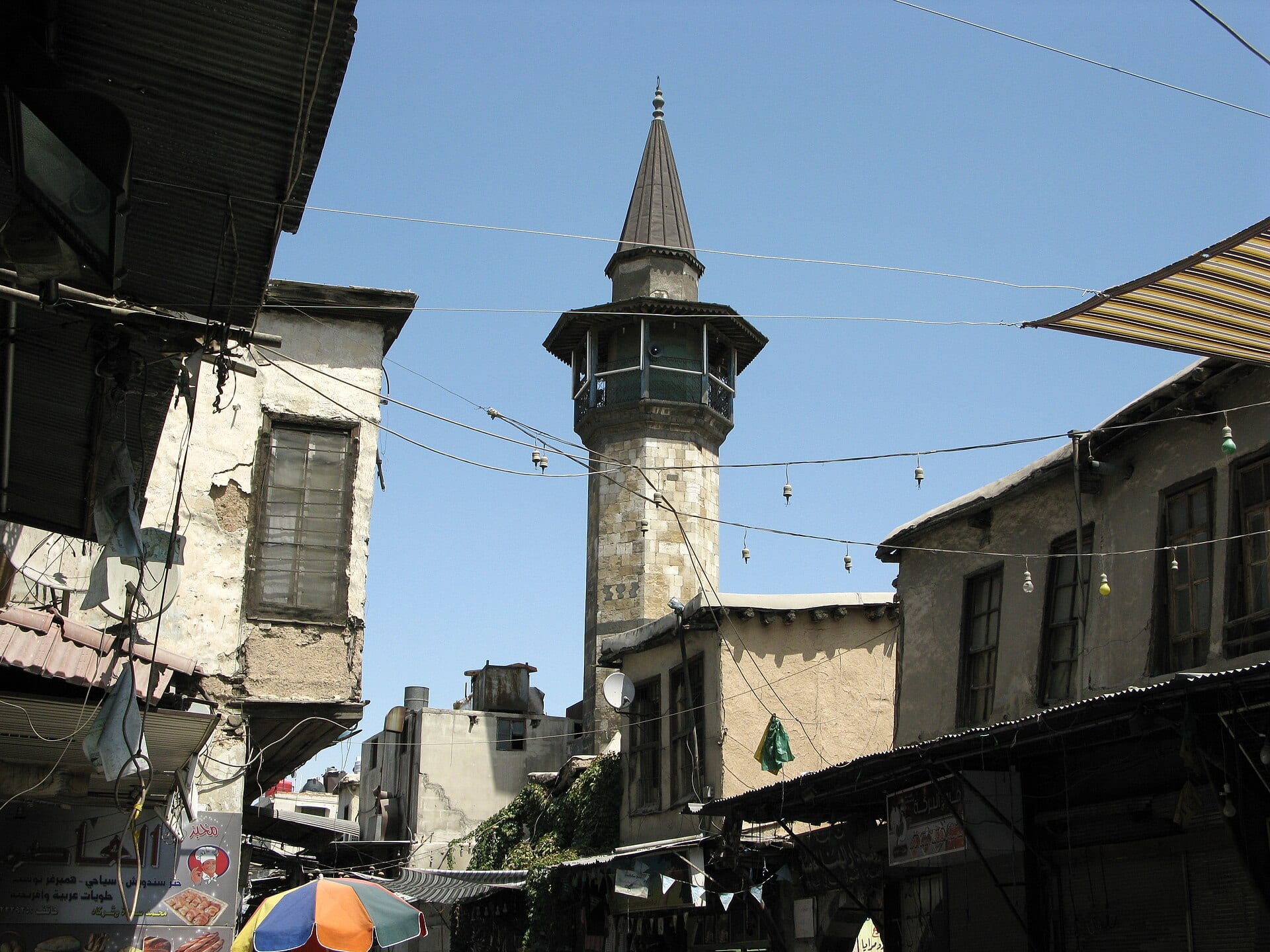
An old mosque minaret in Damascus rising above the surrounding roofs.
- Photograph:
- Vyacheslav Argenberg / Wikimedia Commons
- Licence:
- CC BY 4.0
- Source:
- Wikimedia Commons
- Used in:
- August Is a Different City
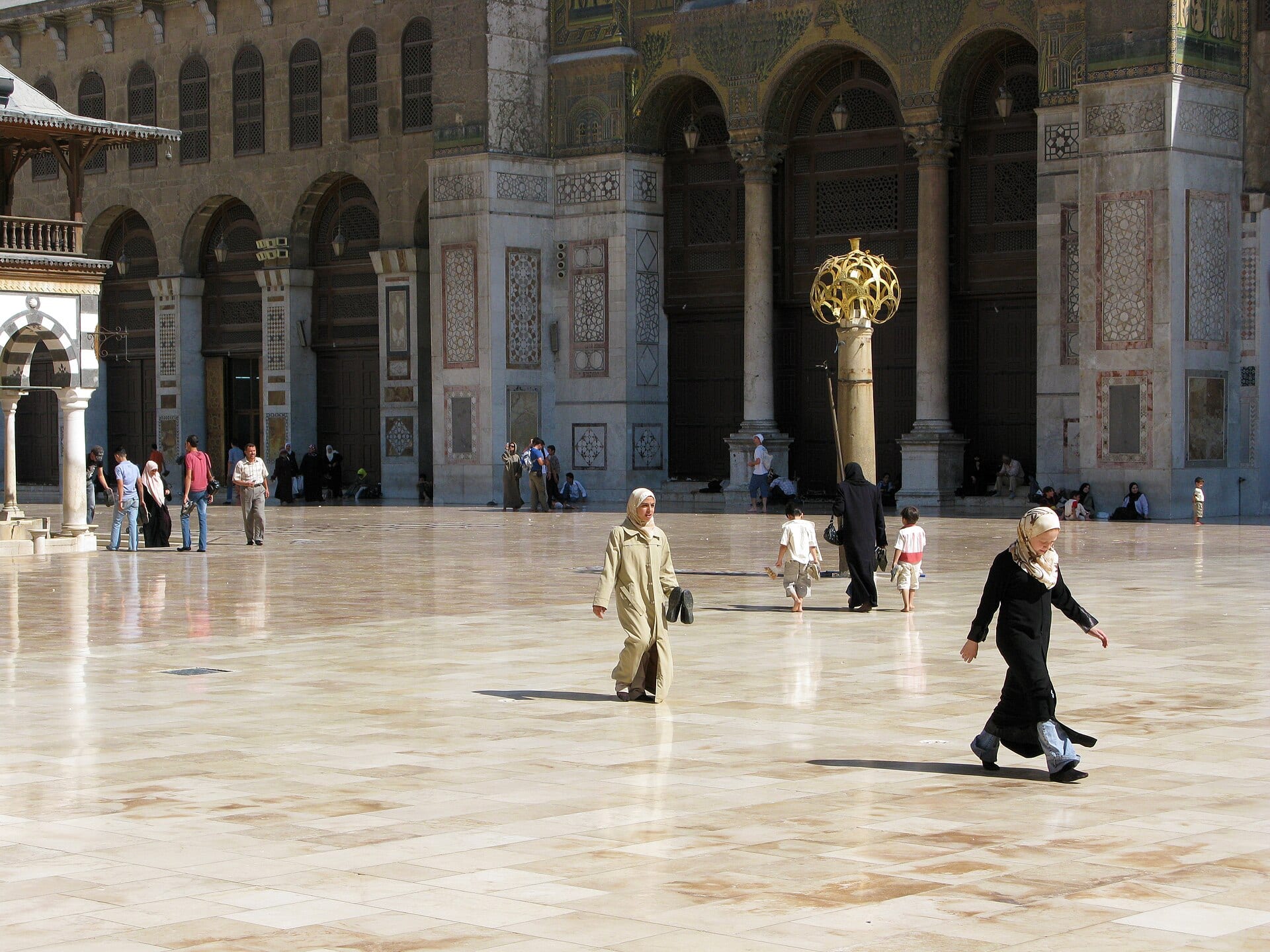
The courtyard of the Umayyad Mosque in Damascus, its arcades and mosaic-faced walls in flat daylight.
- Photograph:
- Vyacheslav Argenberg / Wikimedia Commons
- Licence:
- CC BY 4.0
- Source:
- Wikimedia Commons
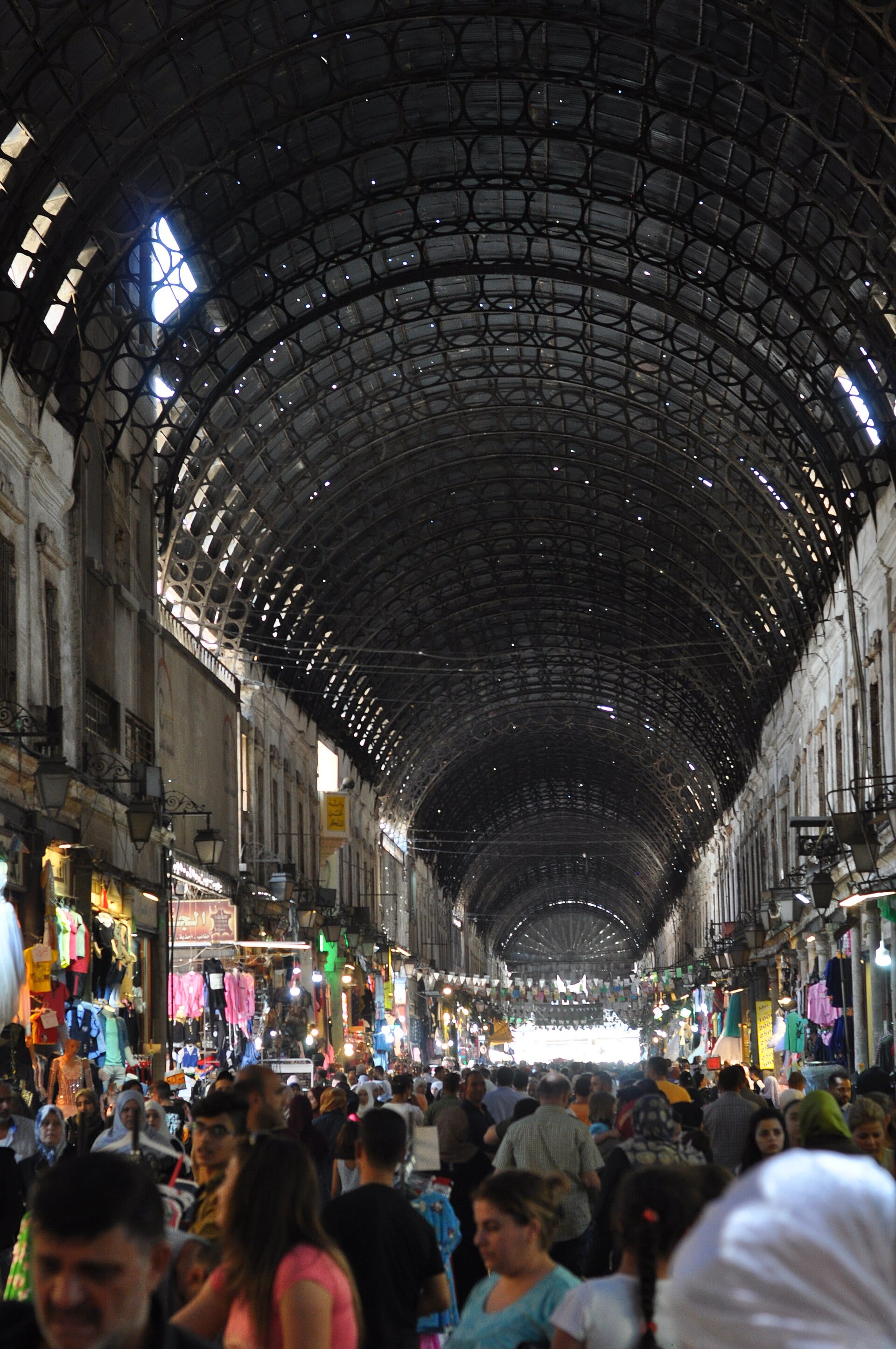
Crowds walking beneath the pierced iron roof of Souq al-Hamidiyah, points of daylight falling through it.
- Photograph:
- Abd Alsattar Ardati / Wikimedia Commons
- Licence:
- CC BY-SA 4.0
- Source:
- Wikimedia Commons
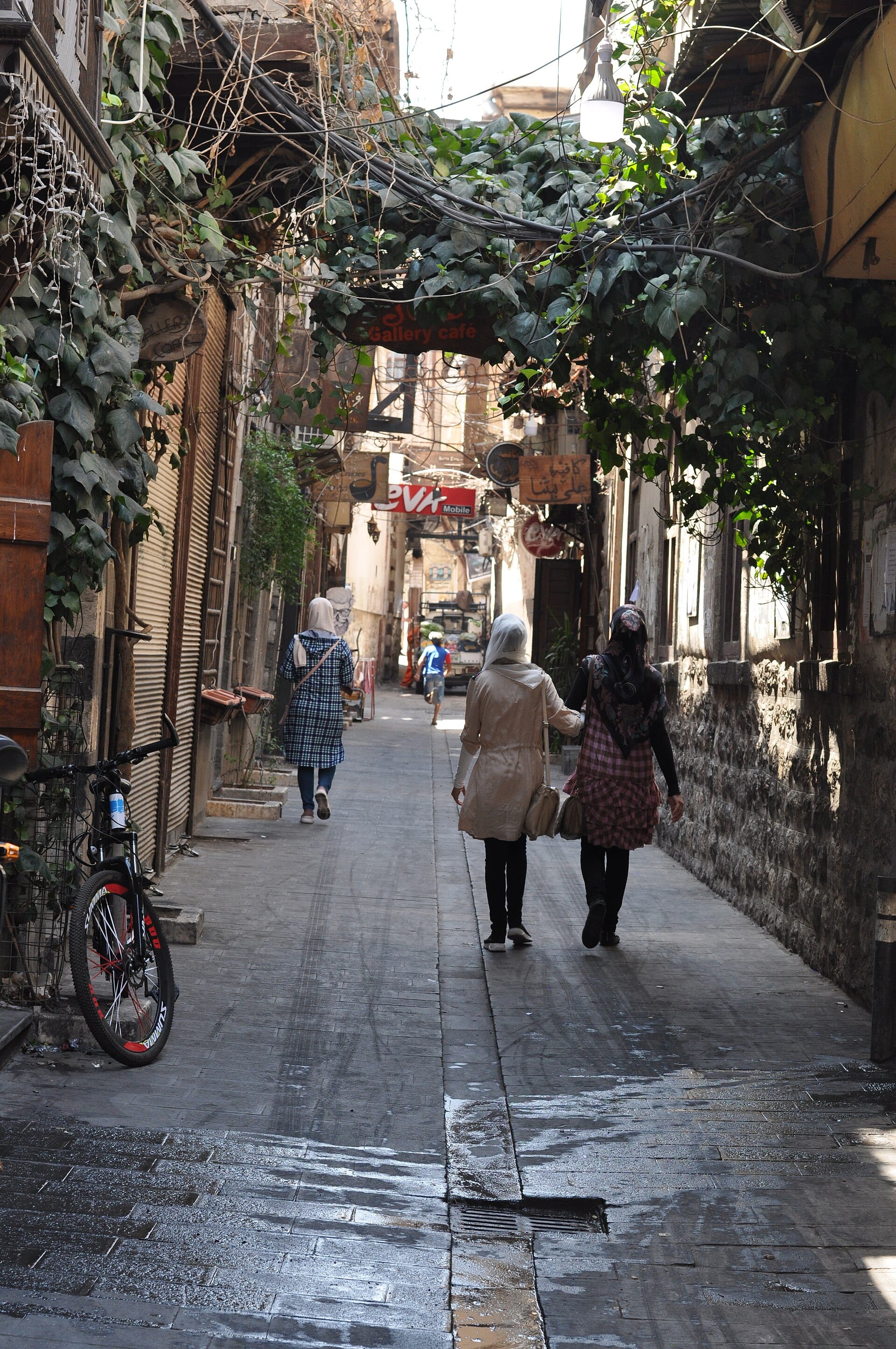
A green alley in old Damascus, vines running along the walls above head height.
- Photograph:
- Abd Alsattar Ardati / Wikimedia Commons
- Licence:
- CC BY-SA 4.0
- Source:
- Wikimedia Commons
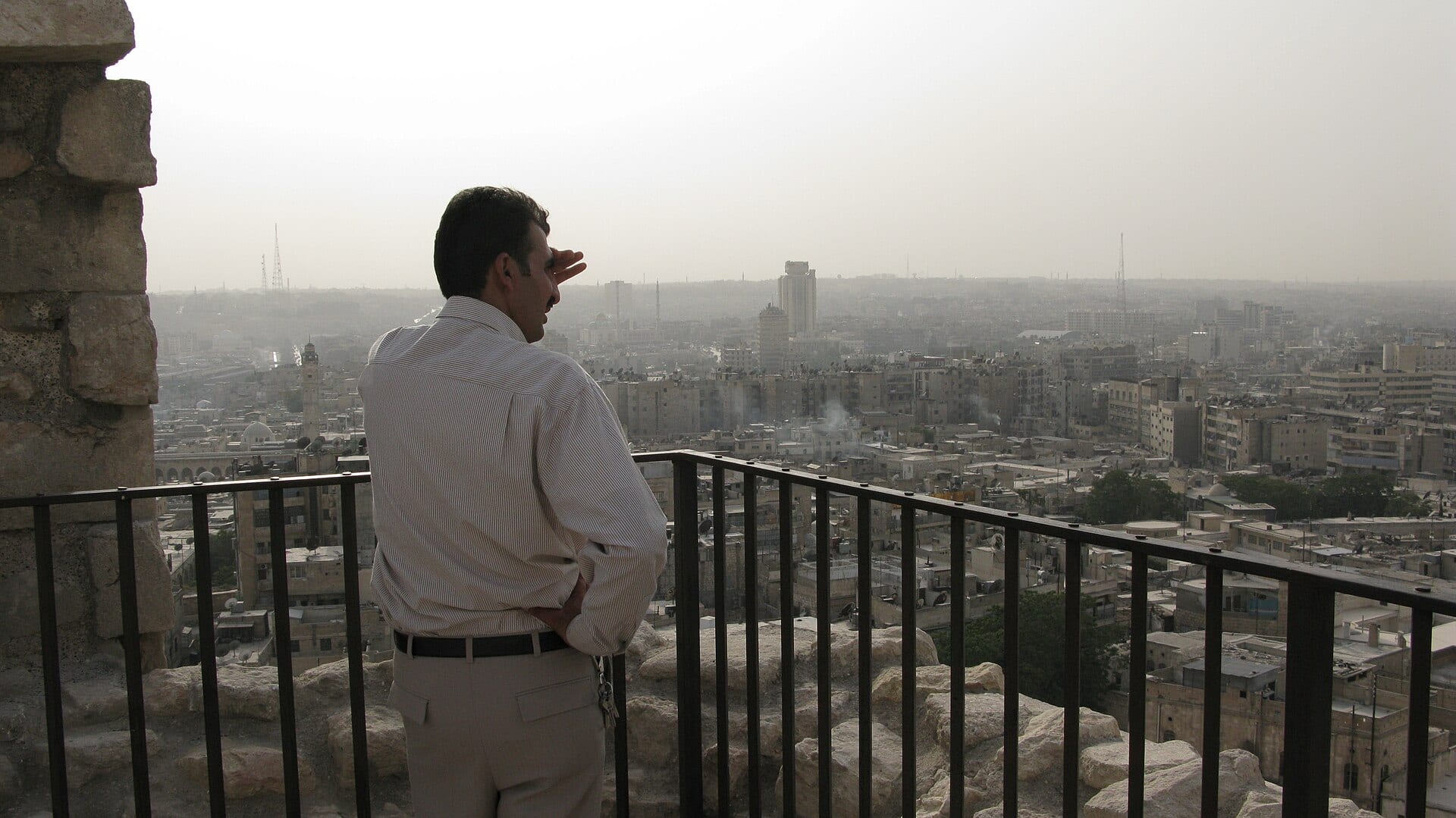
Aleppo seen from the citadel, the city running out to the horizon.
- Photograph:
- Vyacheslav Argenberg / Wikimedia Commons
- Licence:
- CC BY 4.0
- Source:
- Wikimedia Commons
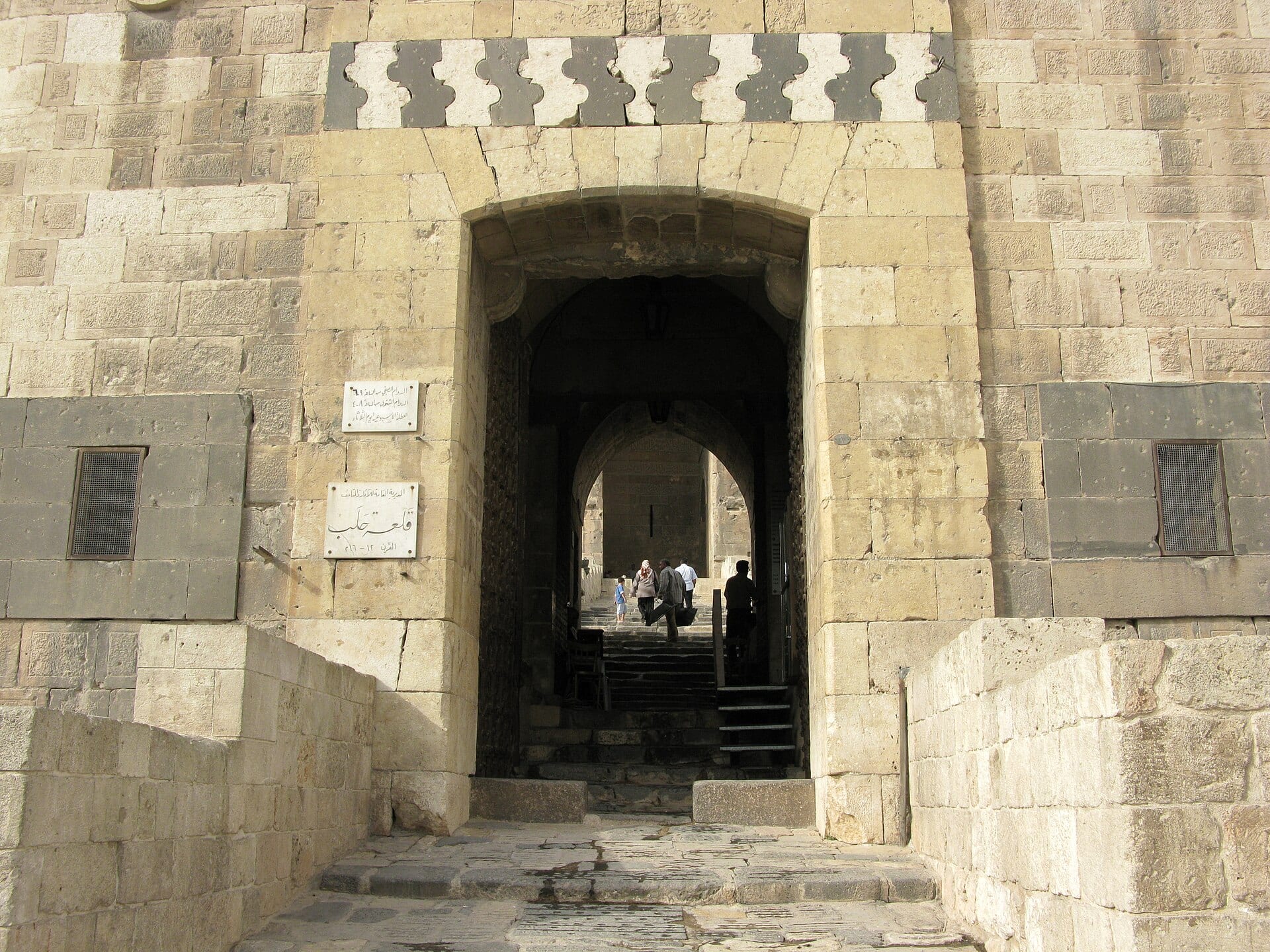
The stone gate of the citadel of Aleppo.
- Photograph:
- Vyacheslav Argenberg / Wikimedia Commons
- Licence:
- CC BY 4.0
- Source:
- Wikimedia Commons
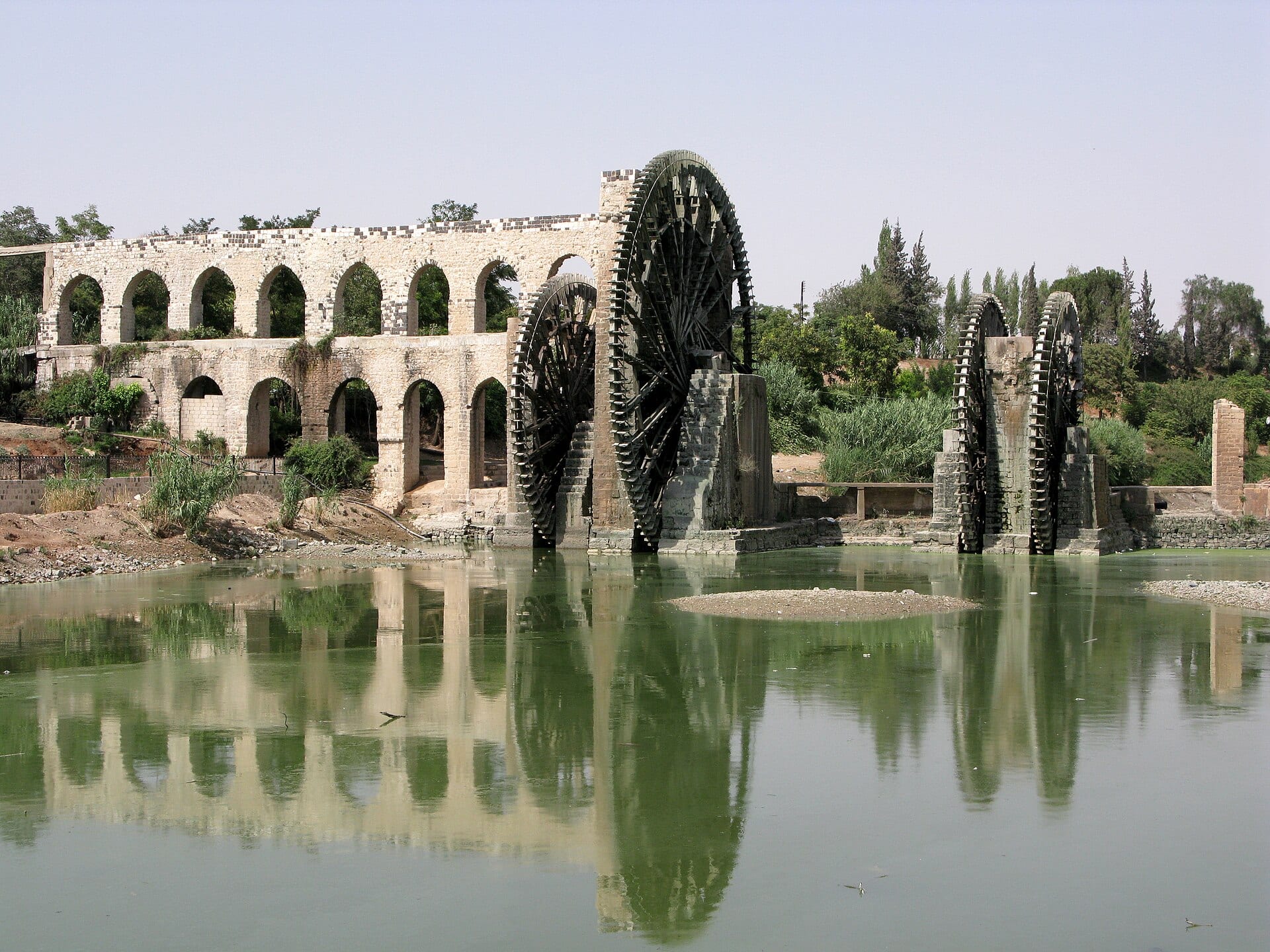
The wooden norias of Hama turning in the Orontes.
- Photograph:
- Vyacheslav Argenberg / Wikimedia Commons
- Licence:
- CC BY 4.0
- Source:
- Wikimedia Commons
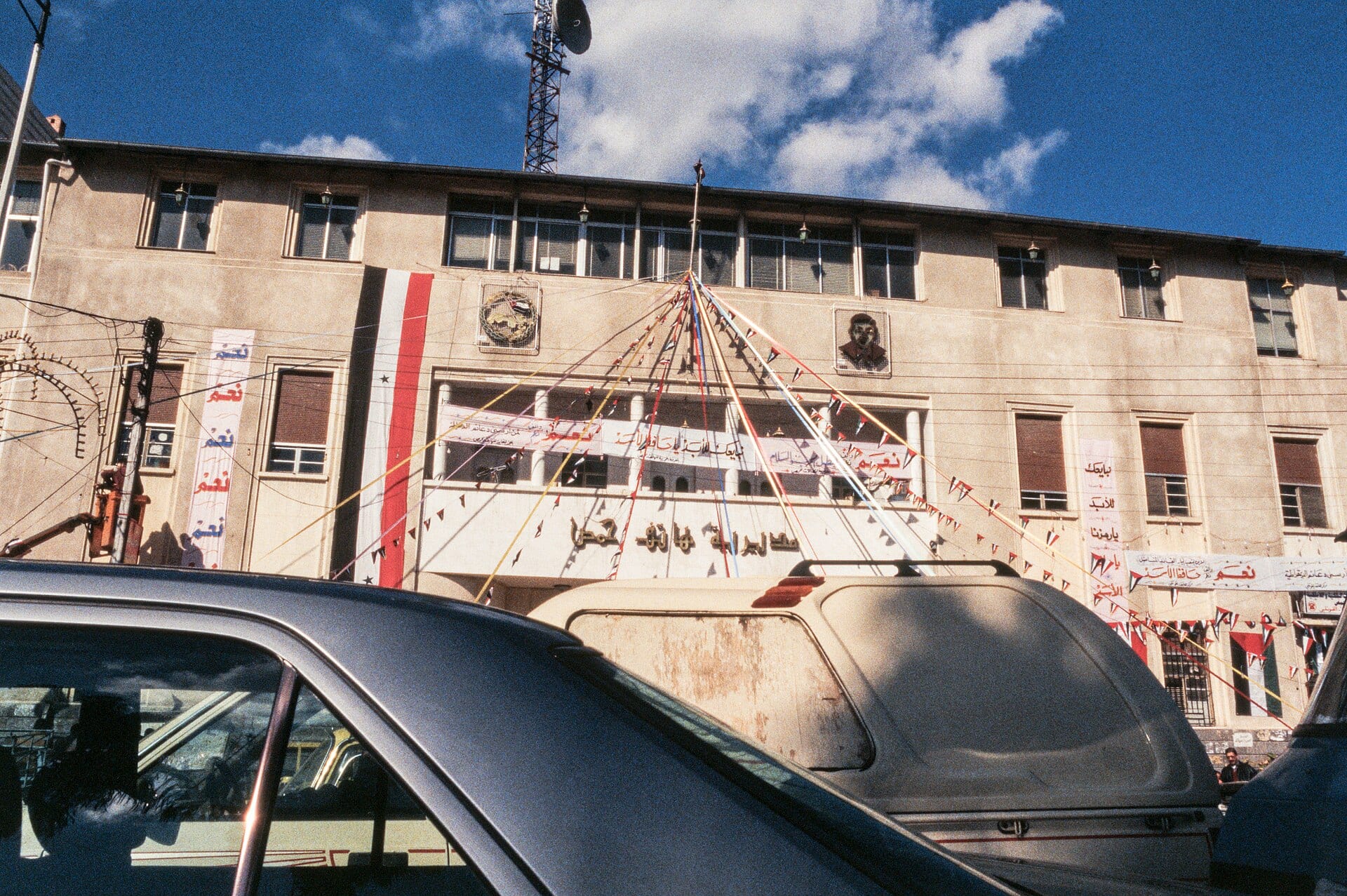
A street in Homs, traffic and shopfronts along both sides.
- Photograph:
- Frank Kidner / Wikimedia Commons
- Licence:
- CC BY-SA 4.0
- Source:
- Wikimedia Commons
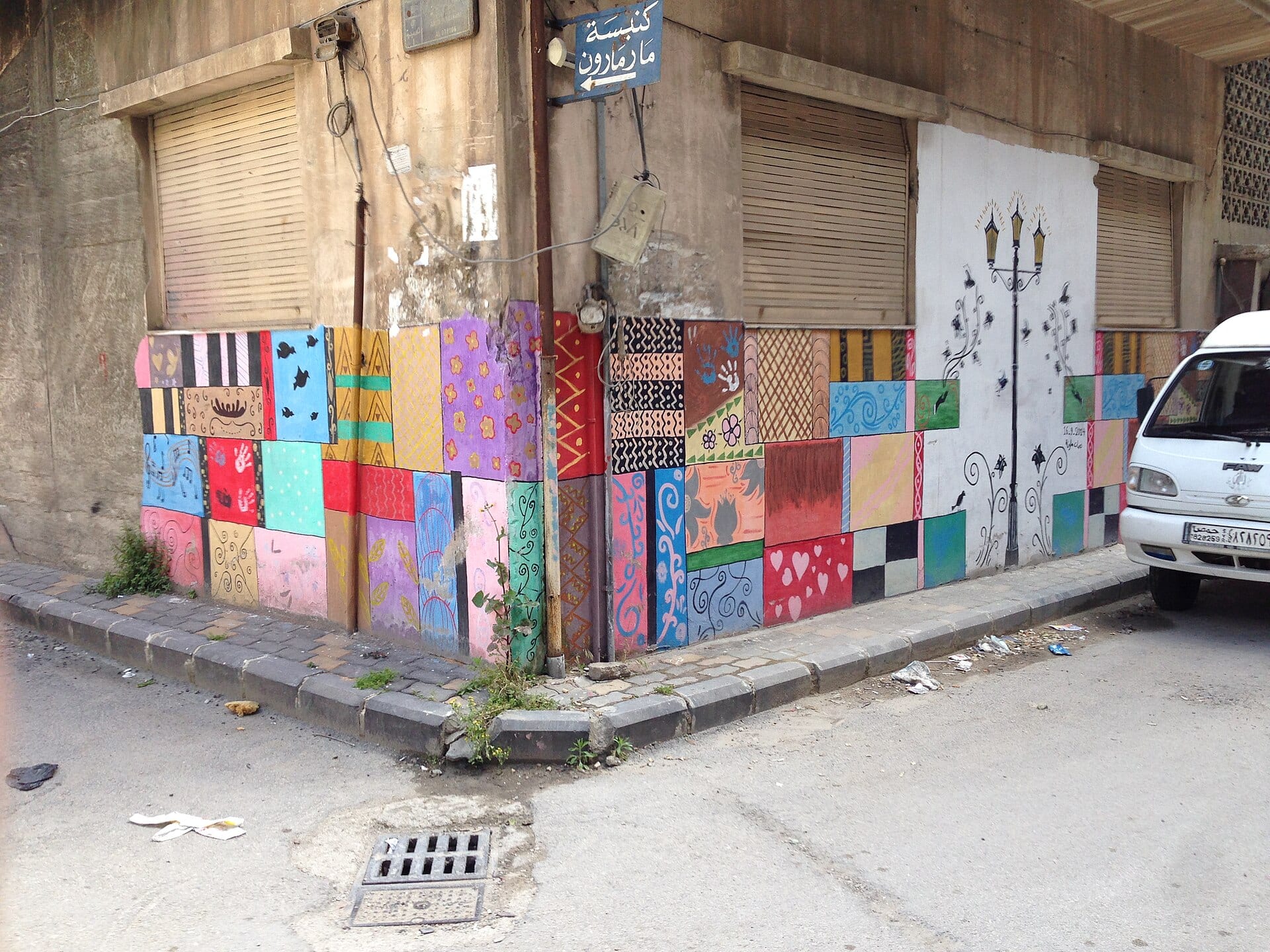
A painted mural on a wall in Homs.
One of a series of murals painted in Homs in 2015.
- Photograph:
- Amgad Beblawi / Wikimedia Commons
- Licence:
- CC BY-SA 4.0
- Source:
- Wikimedia Commons
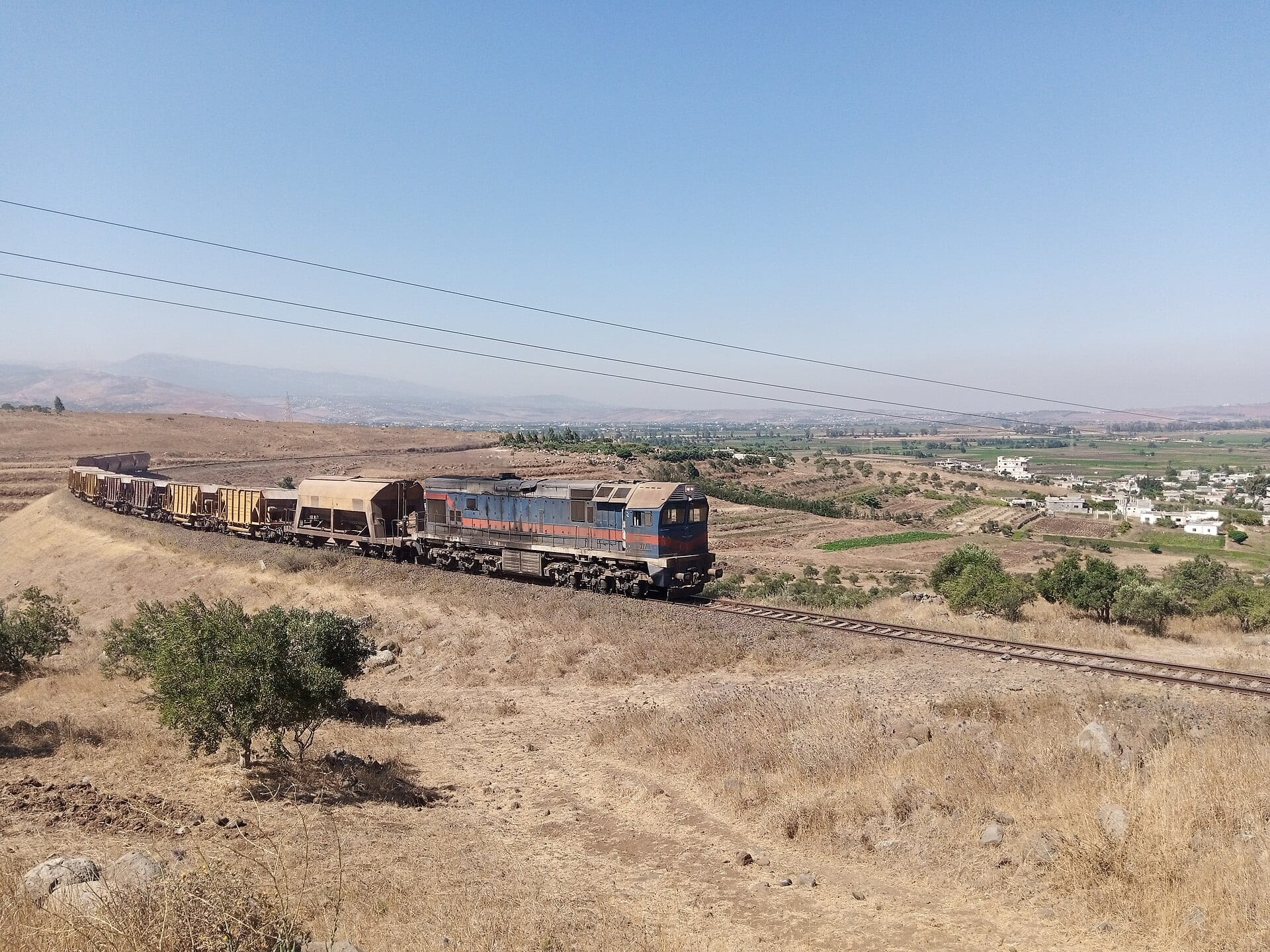
A phosphate freight train crossing open country near Homs.
- Photograph:
- Hayan Alhasan / Wikimedia Commons
- Licence:
- CC BY-SA 4.0
- Source:
- Wikimedia Commons
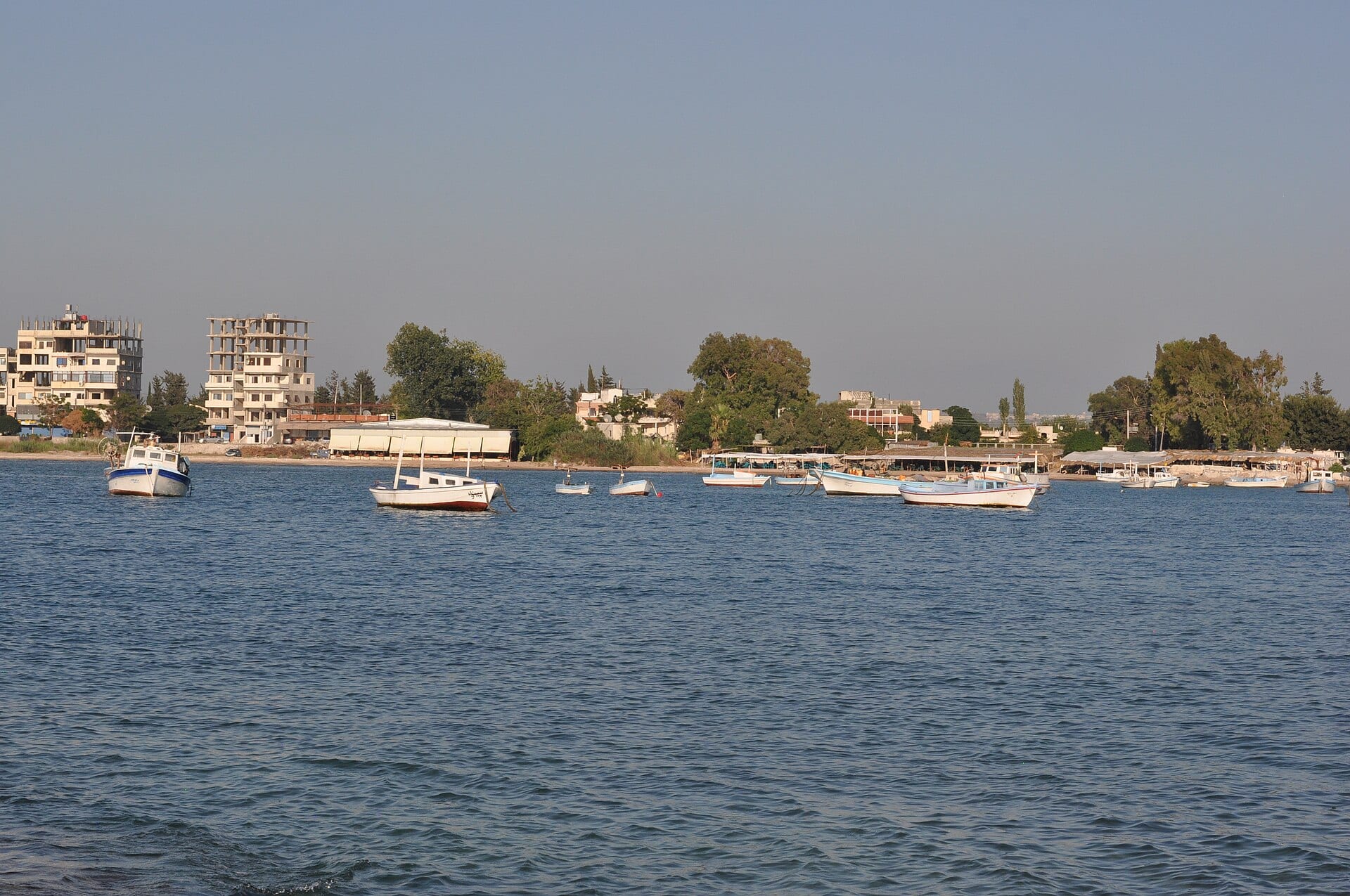
Fishing boats riding off the coast at Ibn Hani, near Latakia.
- Photograph:
- Abd Alsattar Ardati / Wikimedia Commons
- Licence:
- CC BY-SA 4.0
- Source:
- Wikimedia Commons
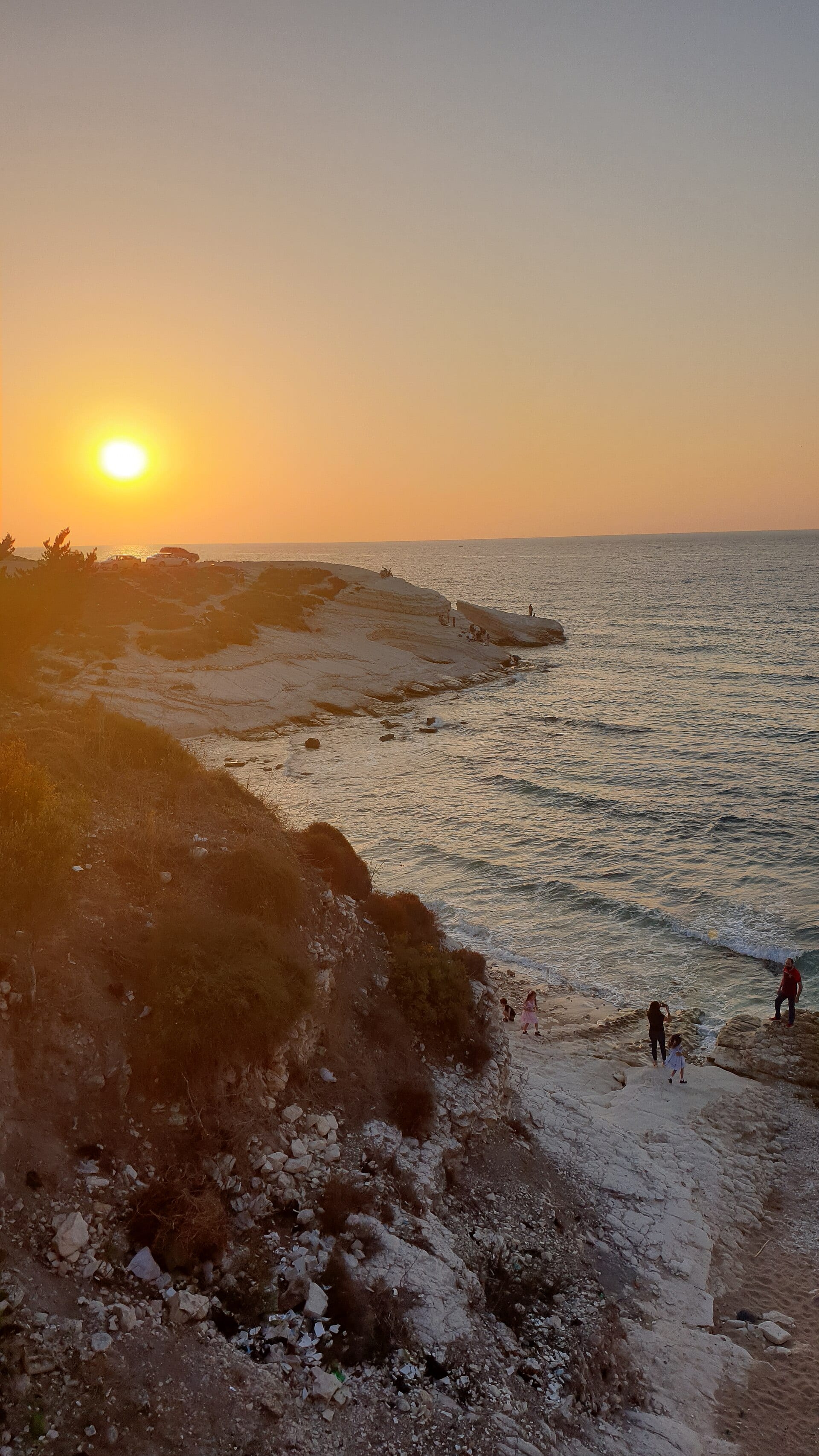
Sunset over the rocky Mediterranean shore near Salib al-Turkman, Latakia.
- Photograph:
- Abd Alsattar Ardati / Wikimedia Commons
- Licence:
- CC BY-SA 4.0
- Source:
- Wikimedia Commons
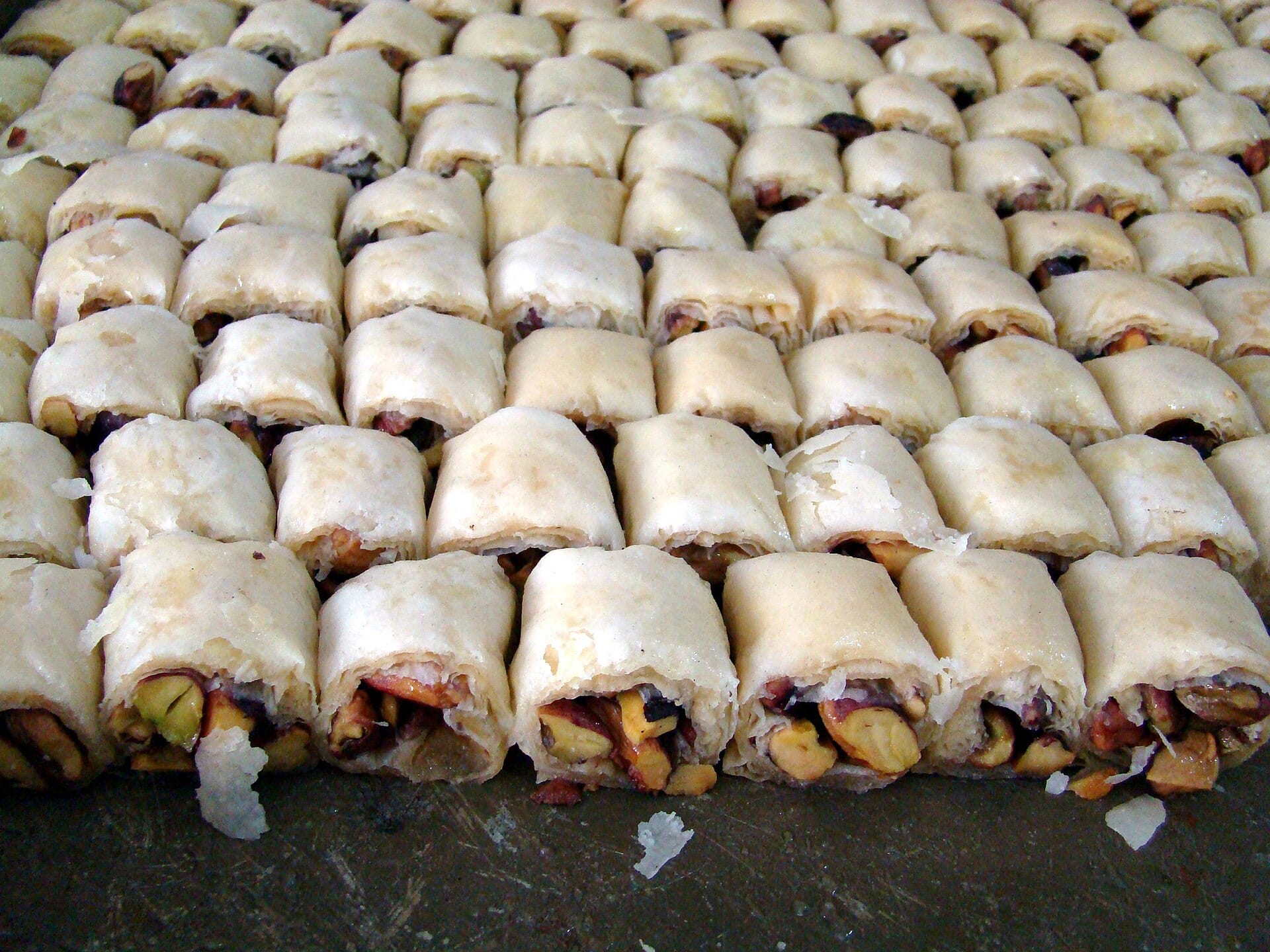
Trays of baklava stacked in the window of a Damascus sweet shop.
- Photograph:
- James Gordon / Wikimedia Commons
- Licence:
- CC BY 2.0
- Source:
- Wikimedia Commons
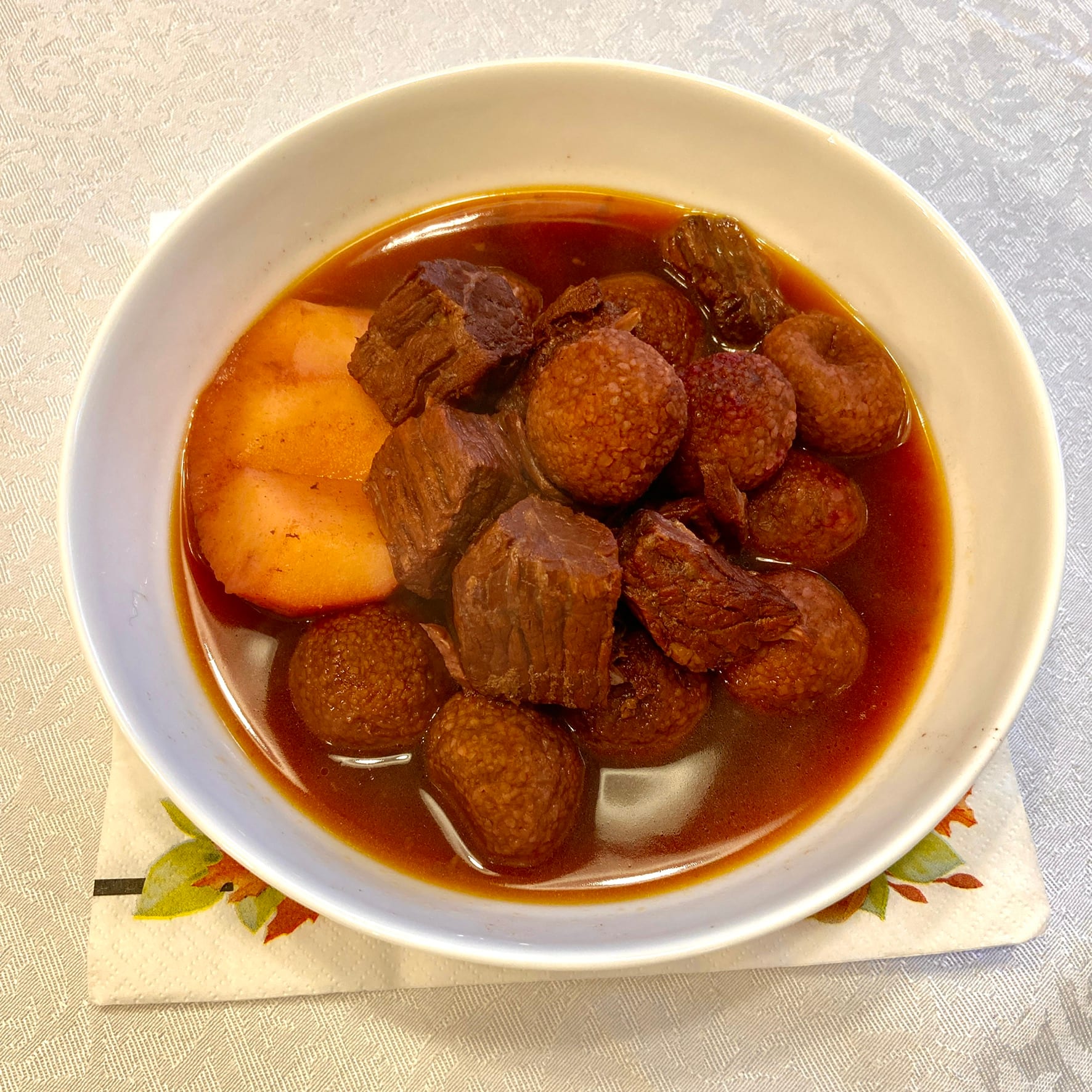
A dish of kibbeh safarjaliyeh, meatballs cooked with quince in a dark sauce.
- Photograph:
- Bee Eater007 / Wikimedia Commons
- Licence:
- CC BY-SA 4.0
- Source:
- Wikimedia Commons
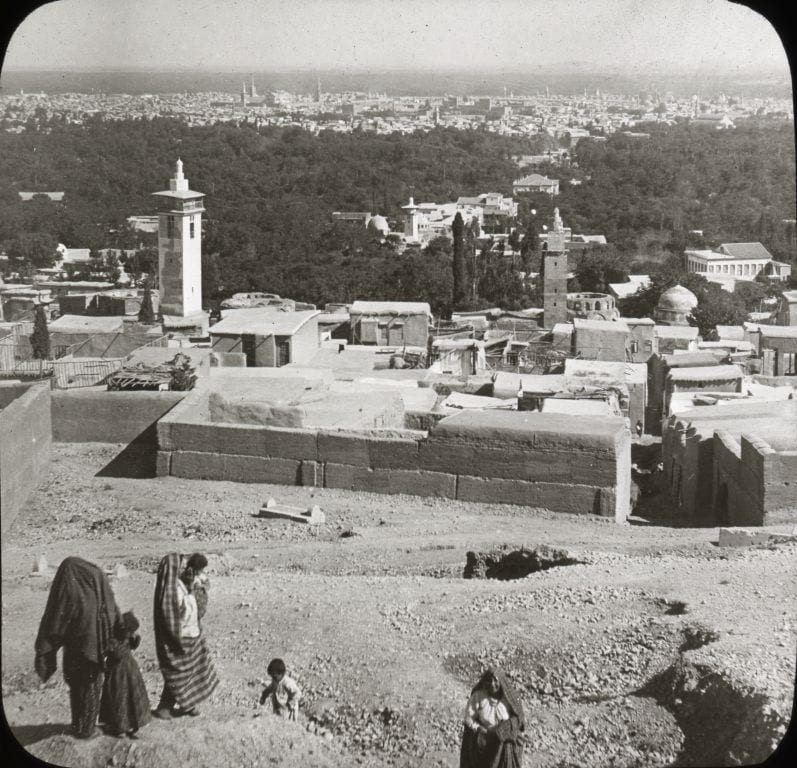
A distant historical view of Damascus, the city low on the plain beneath a wide sky.
A distant view of Damascus held by Oregon State University Special Collections and Archives.
- Photograph:
- OSU Special Collections & Archives / Wikimedia Commons
- Licence:
- No known restrictions
- Source:
- Wikimedia Commons
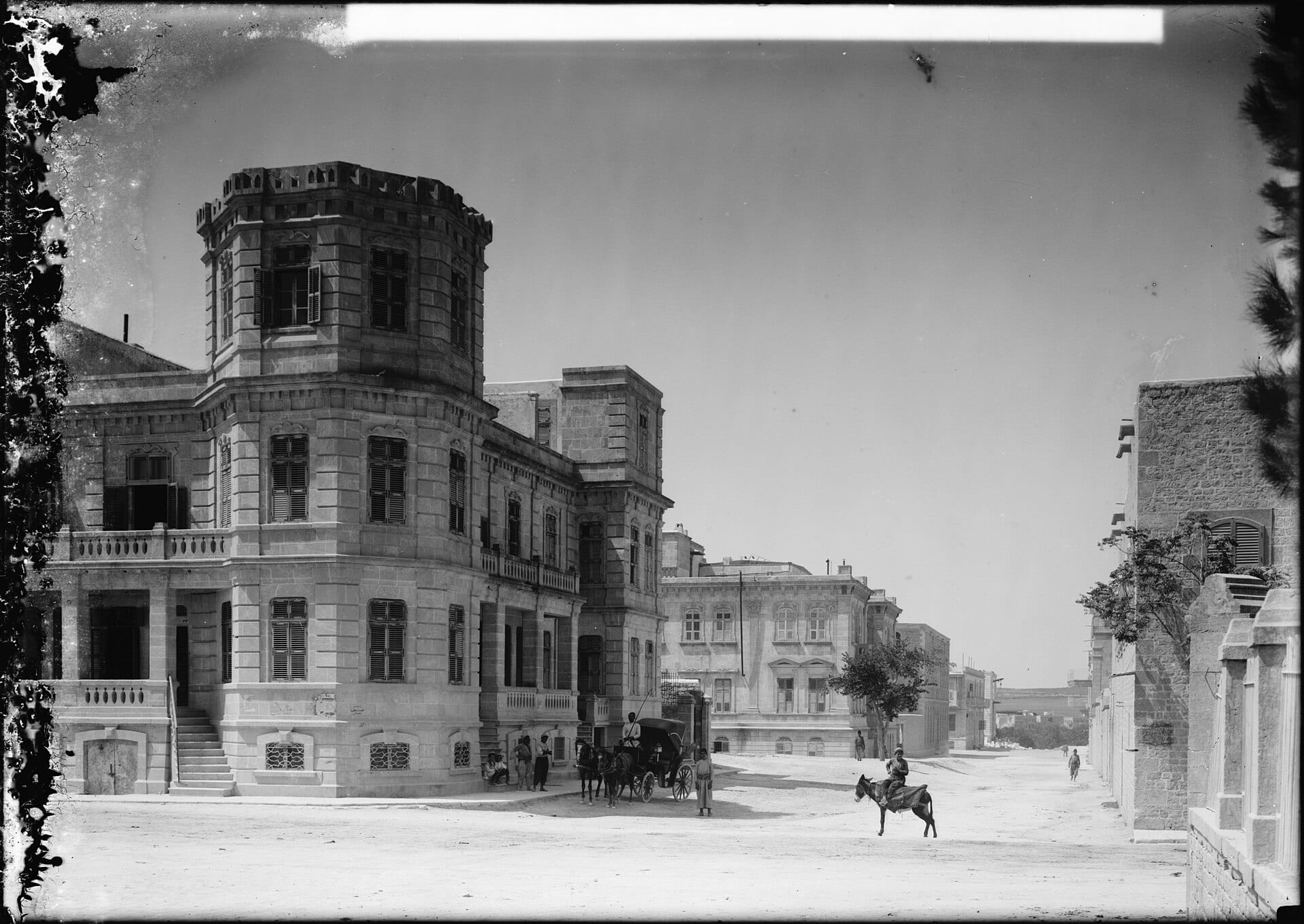
An early twentieth-century street in the new quarters of Aleppo, tram lines running down the middle.
A street in the new quarters of Aleppo, photographed by the Matson Collection.
- Photograph:
- Matson Collection / Wikimedia Commons
- Licence:
- Public domain
- Source:
- Wikimedia Commons
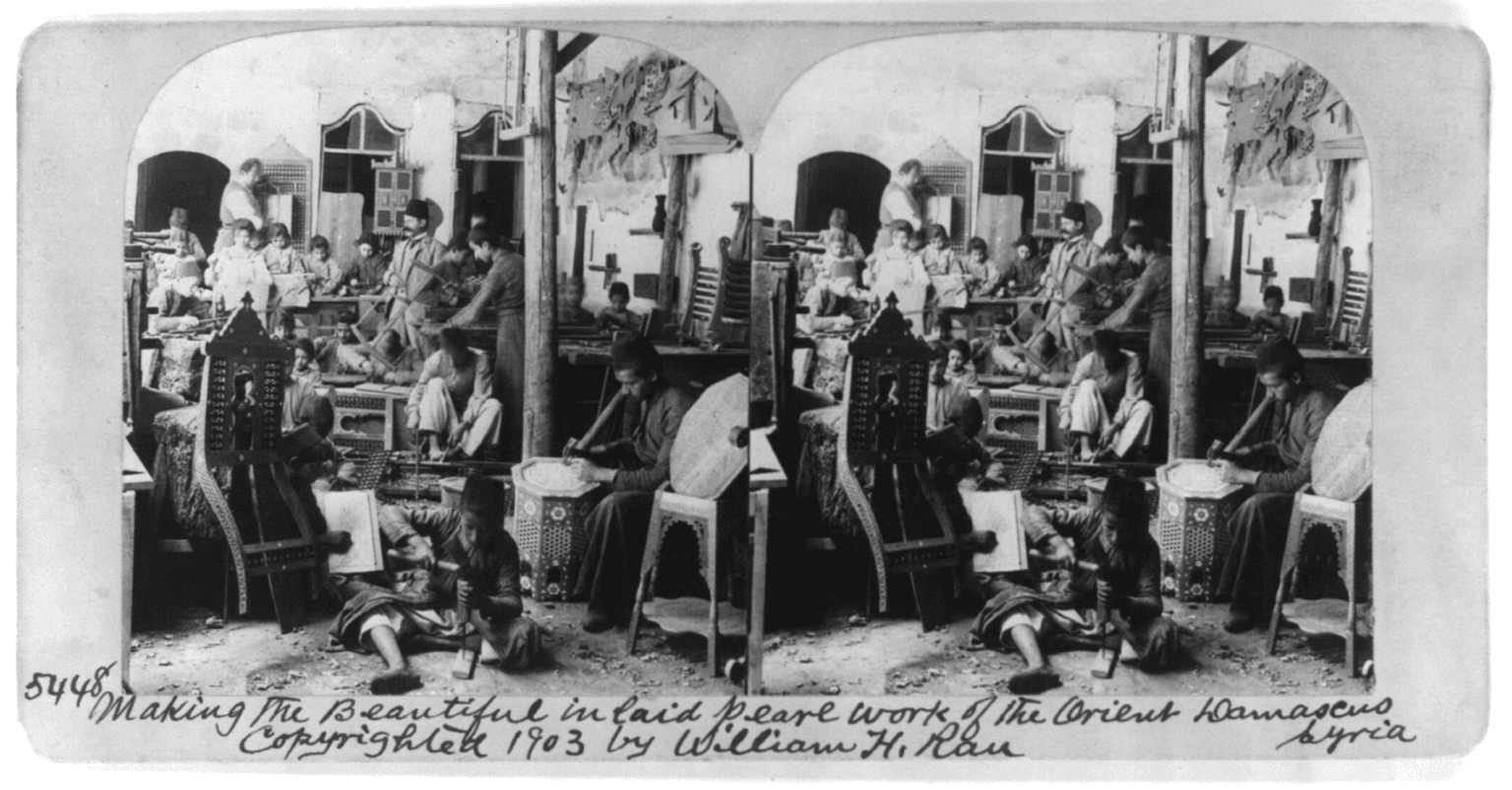
A historical photograph of craftsmen seated at low benches making mother-of-pearl inlay in Damascus.
Mother-of-pearl inlay workshops in Damascus, photographed by William H. Rau around the turn of the twentieth century.
- Photograph:
- William H. Rau / Wikimedia Commons
- Licence:
- Public domain
- Source:
- Wikimedia Commons


._Daraa._A_Hedjaz_R.R._(i.e.,_Railroad)_junction_in_Gilead_LOC_matpc.15962.jpg)


,_Syria_-_Street_view_-_PHBZ024_2016_9692_-_Dumbarton_Oaks.jpg)


