Damascus, Syria
The Room That Was Built for a Voice
A Damascene courtyard house is an acoustic instrument that also happens to be somewhere to live. Musicians have known this for a long time; the architects who built them never wrote it down.
By The Bayt Syria culture desk
31 December 2020
1 min read
Damascus
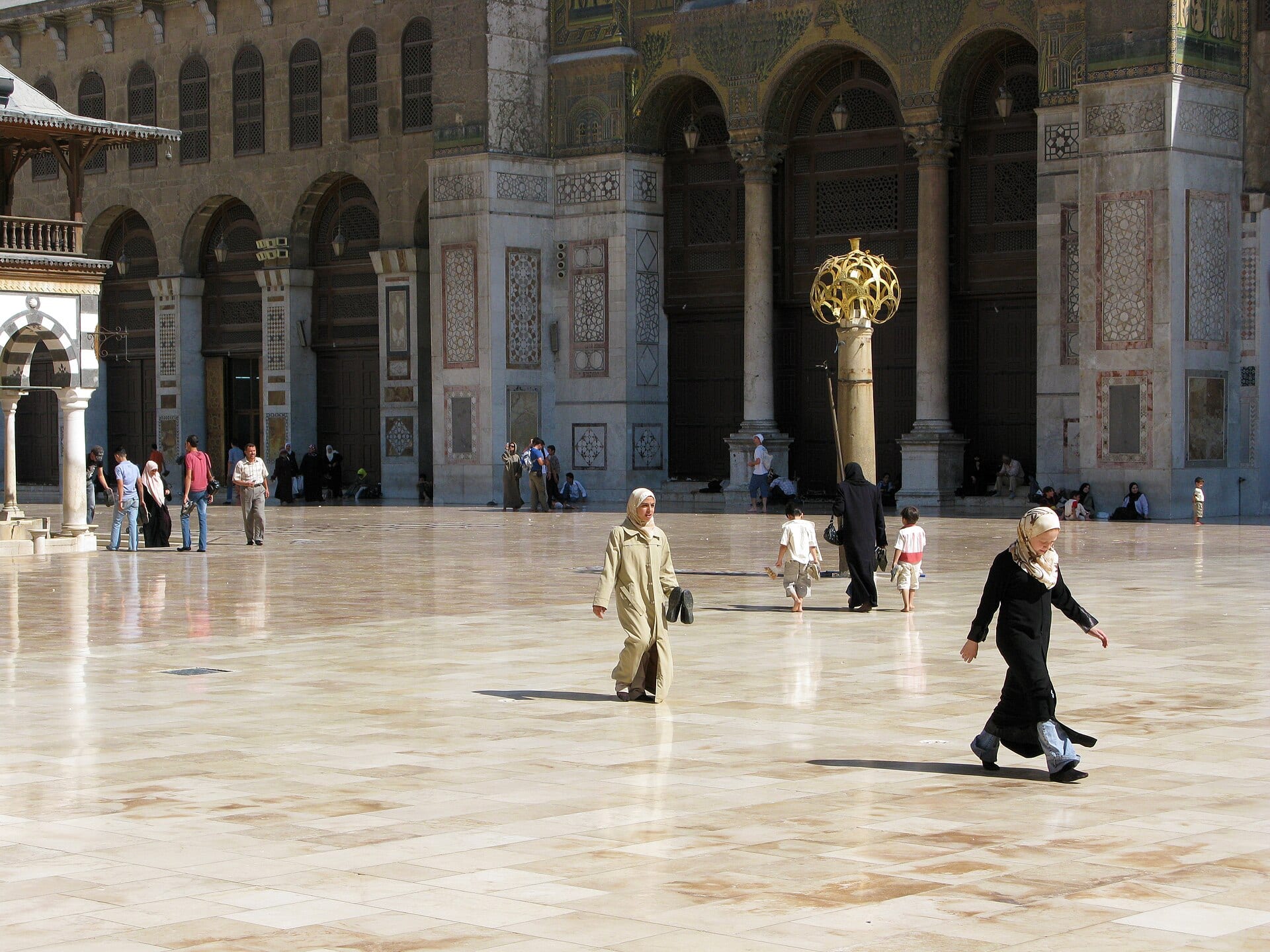
Stand in the middle of a courtyard and speak normally, and you will hear yourself come back. Not as an echo — as a slight thickening, a fraction of a second behind the voice.
Move two metres towards the wall and it goes away. Move back and it returns. There is a spot, and everyone who plays in these rooms finds it within about a minute, and nobody has to be told it is there.
This was not designed as an acoustic. It is a by-product of stone, symmetry, a hard floor and an opening to the sky, arrived at for reasons that were about heat and water and privacy.
The best rooms in most musical traditions were built for something else, and then somebody sang in them.
What it favours is specific. A single voice, unamplified, in the middle register, does very well. A large ensemble does not; the reflections stop being flattering and start being confusing above a certain density. The fountain, which never stops, sets a floor under everything and takes the edge off anything sharp.
Which is a fair description of the repertoire that grew up in these houses: small, vocal, ornamented, and not loud.
Musicians who have recorded in restored courtyards report the same difficulty. A microphone hears the room as a problem to be solved and places itself accordingly, close in, where the effect does not exist. What you get is technically clean and sounds like nothing.
Context
- Why hard surfaces and open sky
- A courtyard is enclosed on four sides by stone and open above. Sound reflects off the walls but leaves through the top rather than building up, which produces a short, bright reverberation instead of the long smear a fully enclosed hall of the same size would give. The fountain adds continuous broadband noise, which masks small sounds and makes the space feel quieter than it measures.
Photographs


More from Damascus
Damascus, Syria
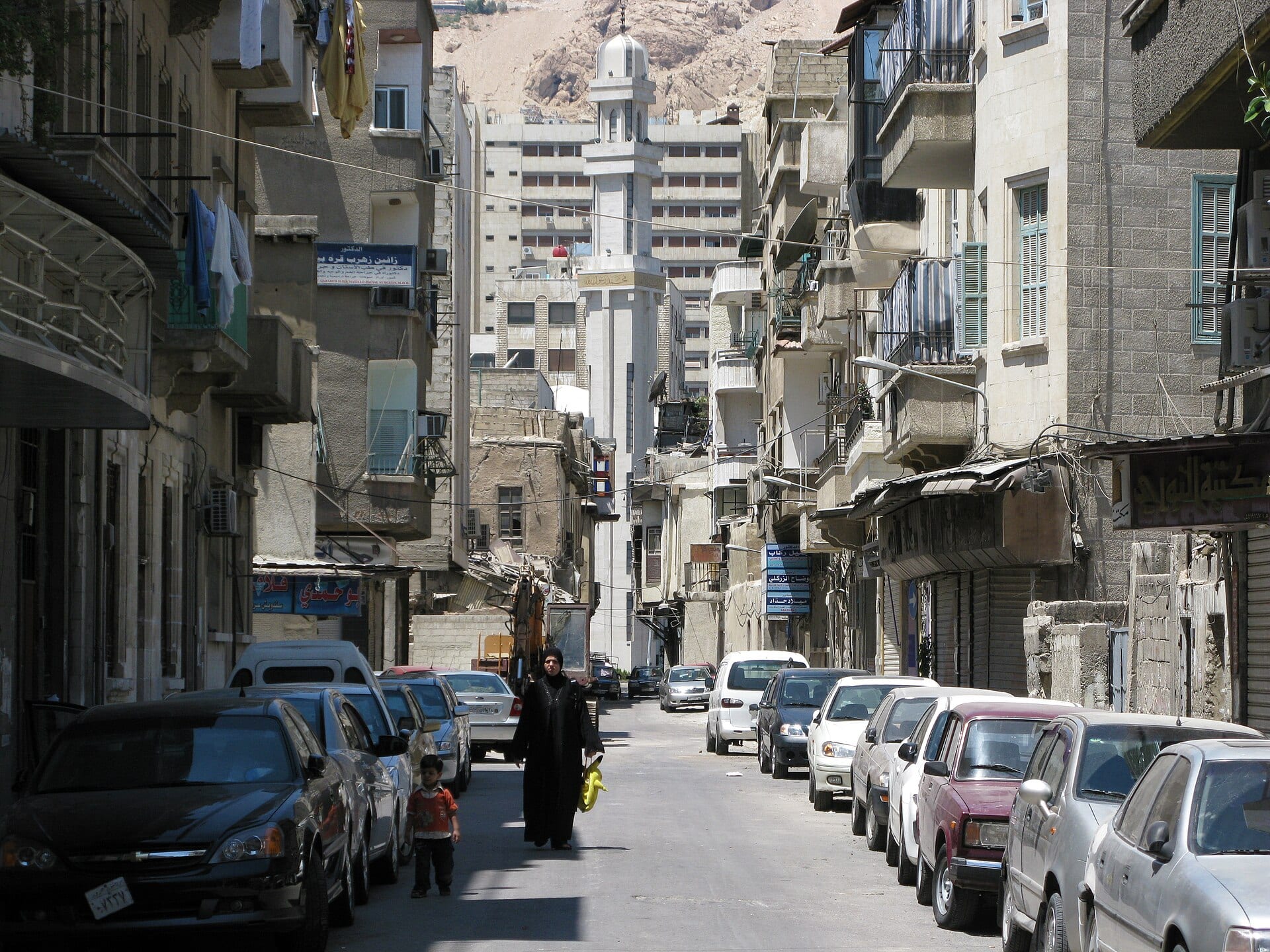
The Hour Before the Shops Open
A letter about the part of the day nobody photographs, and the small economy that runs inside it.
11 February 2021
Damascus, Syria
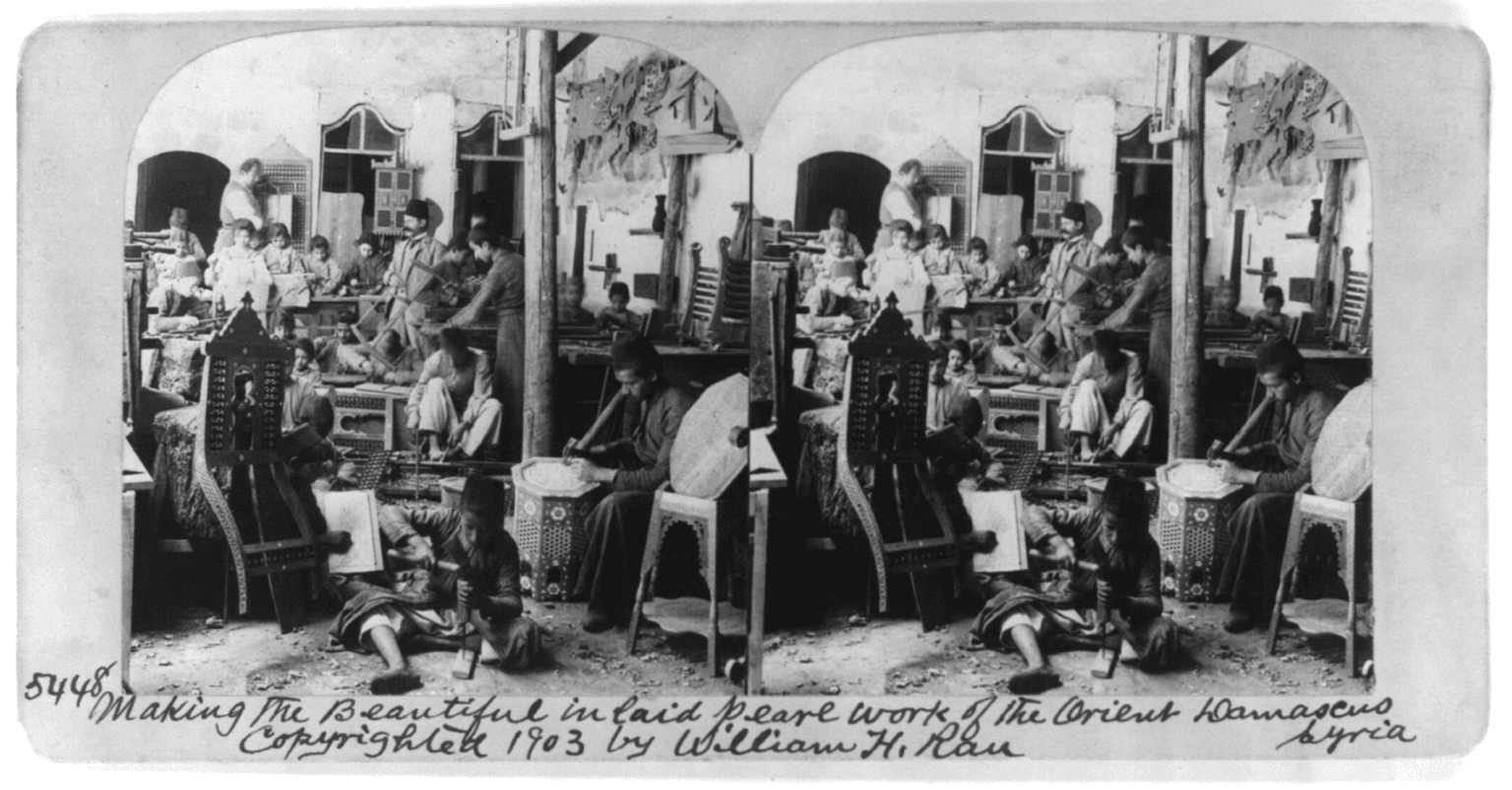
The Craft That Survived by Being Slow
Damascene inlay cannot be rushed, cannot be automated and cannot be faked at close range. Each of those has, at different times, nearly killed it — and then saved it.
8 February 2021
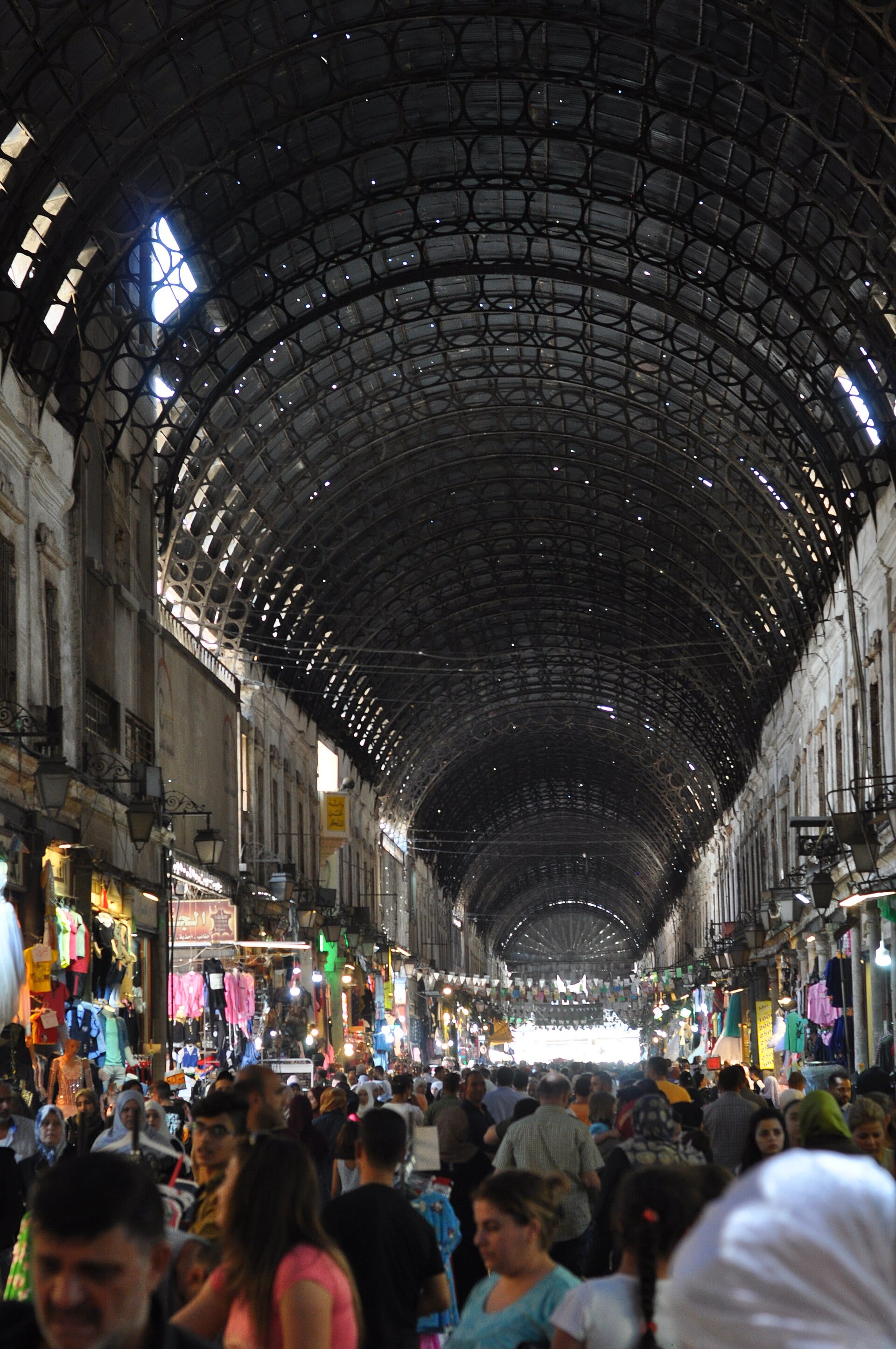
Damascus, Syria
The Roof Full of Holes That Nobody Wants Repaired
The iron roof over Souq al-Hamidiyah is perforated by damage nearly a century old. It has become the most photographed light in the city — and an argument about what restoration is for.
31 January 2021
Related stories
Damascus, Syria
The Craft That Survived by Being Slow
Damascene inlay cannot be rushed, cannot be automated and cannot be faked at close range. Each of those has, at different times, nearly killed it — and then saved it.
8 February 2021
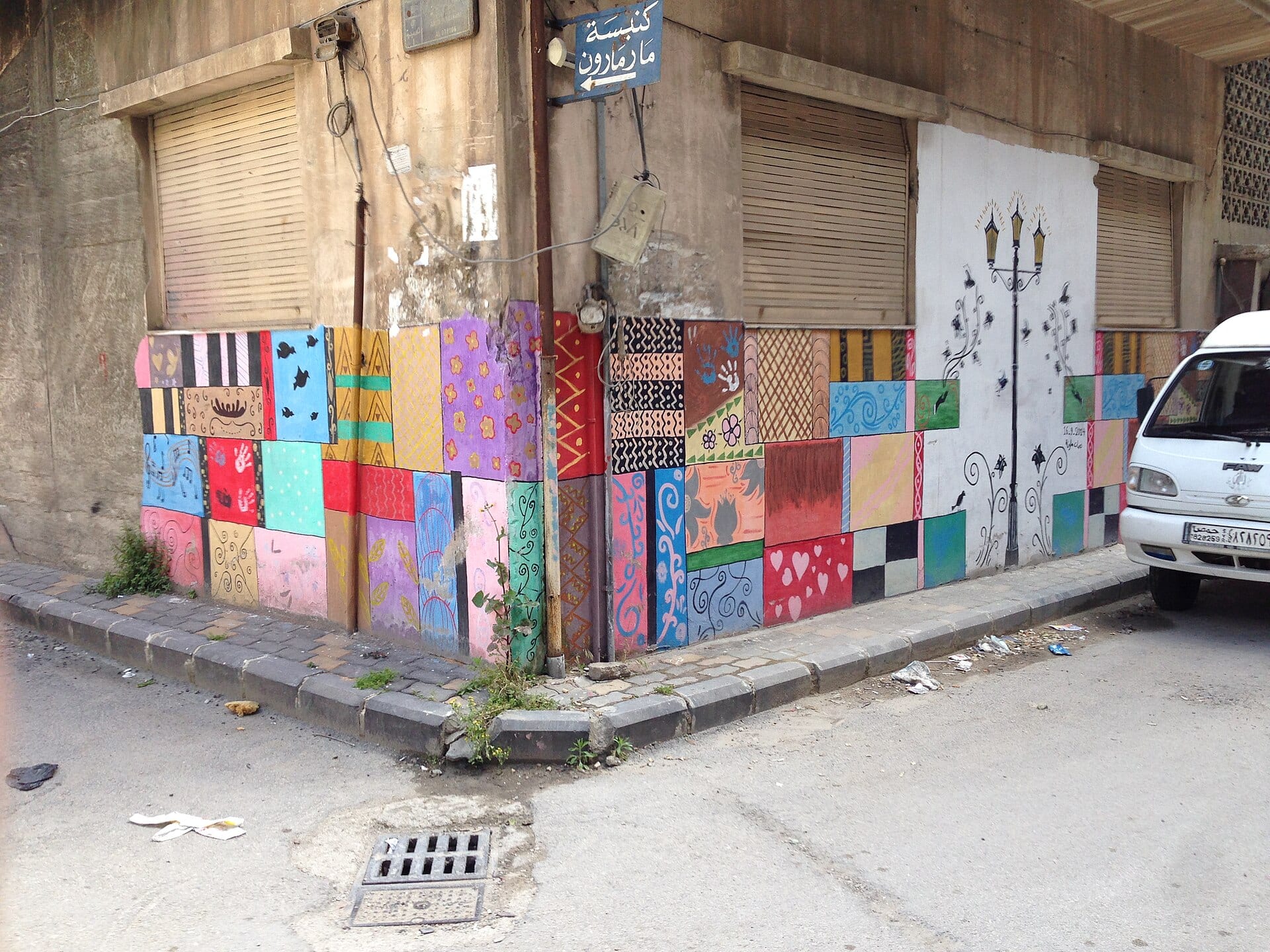
Homs, Syria
Five Walls in Homs
Painted in 2015, on surfaces that had not been chosen for painting. Six years on, what has survived is not what anyone expected.
7 January 2021
Damascus, Syria
The Roof Full of Holes That Nobody Wants Repaired
The iron roof over Souq al-Hamidiyah is perforated by damage nearly a century old. It has become the most photographed light in the city — and an argument about what restoration is for.
31 January 2021